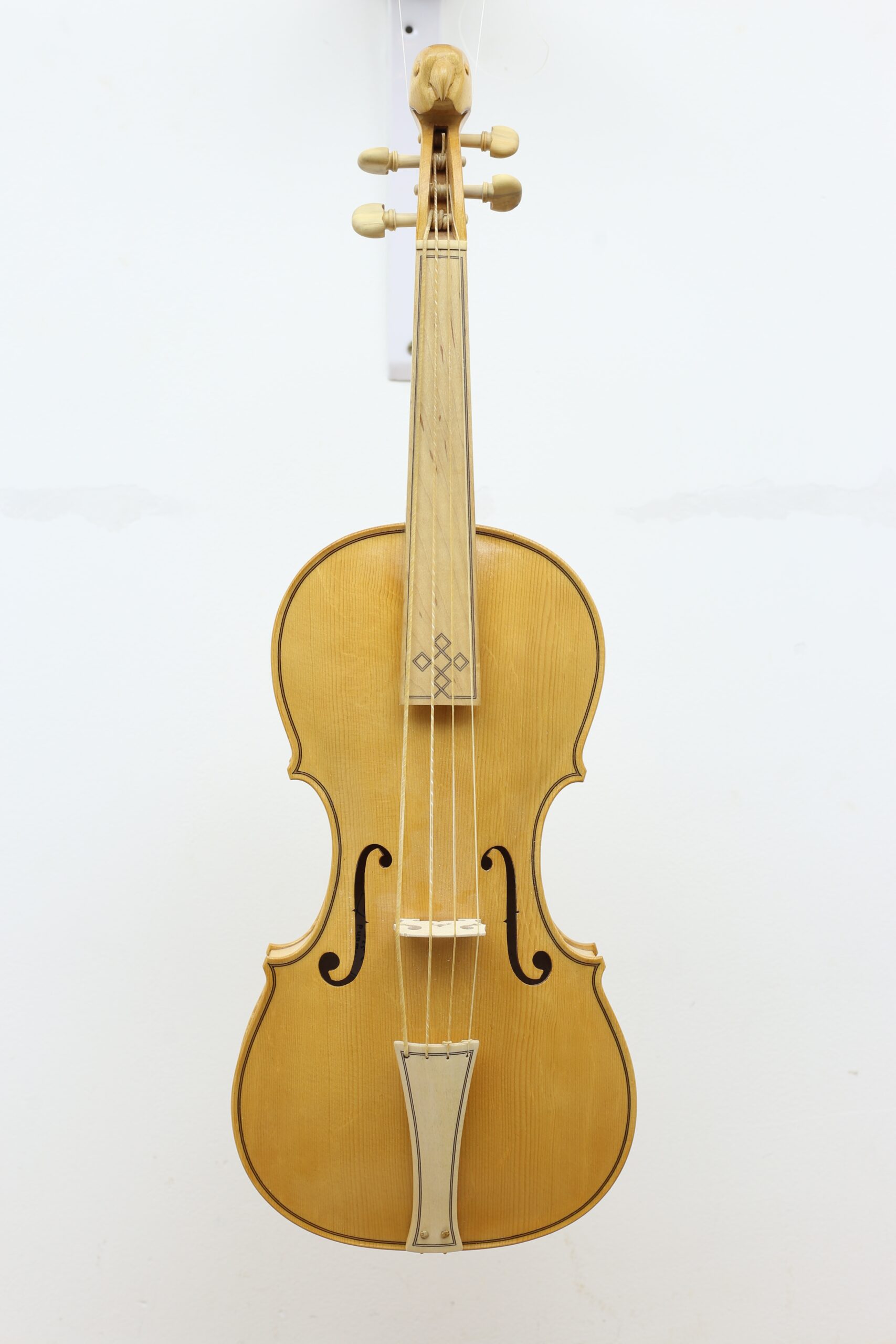
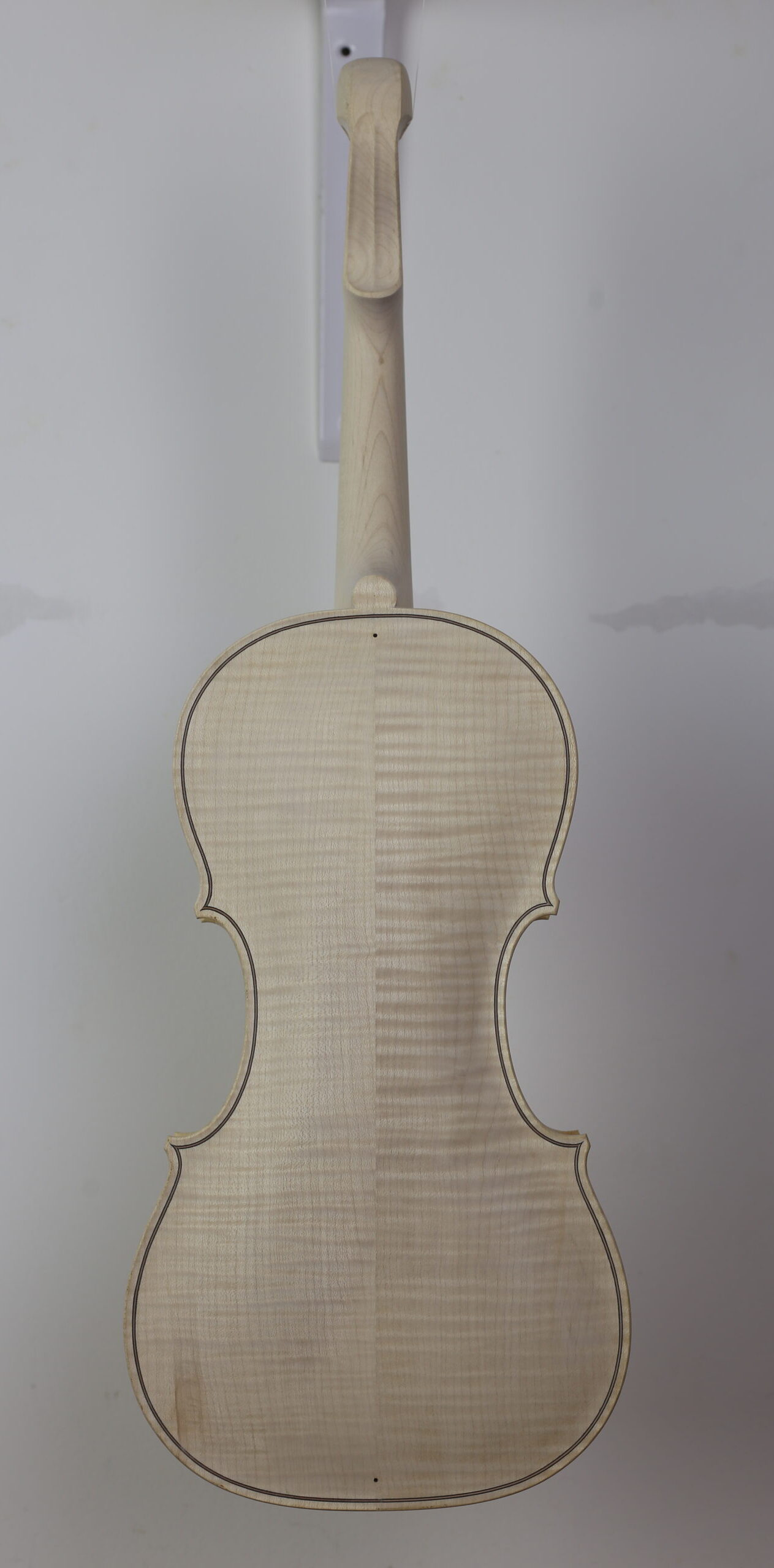
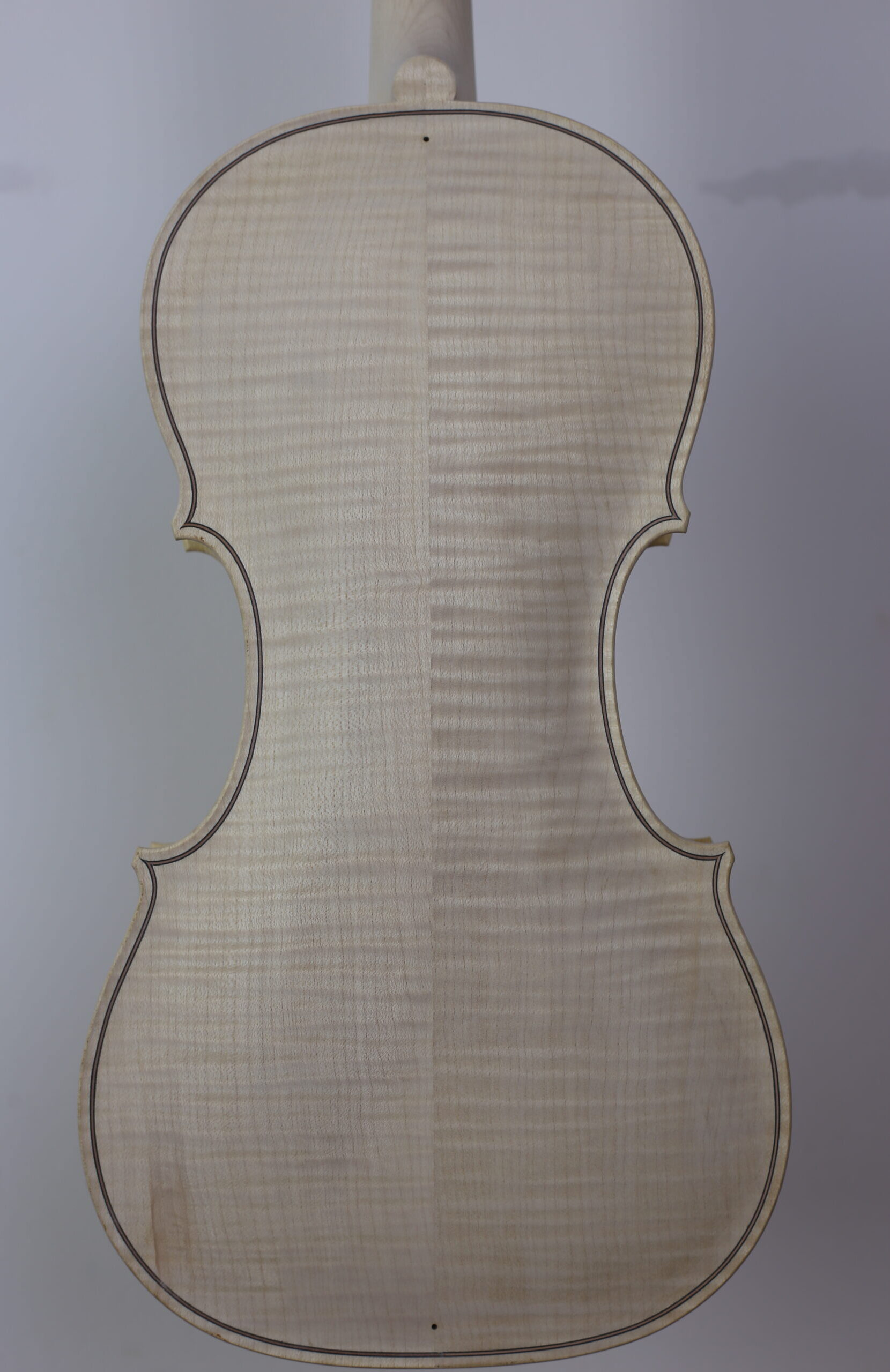
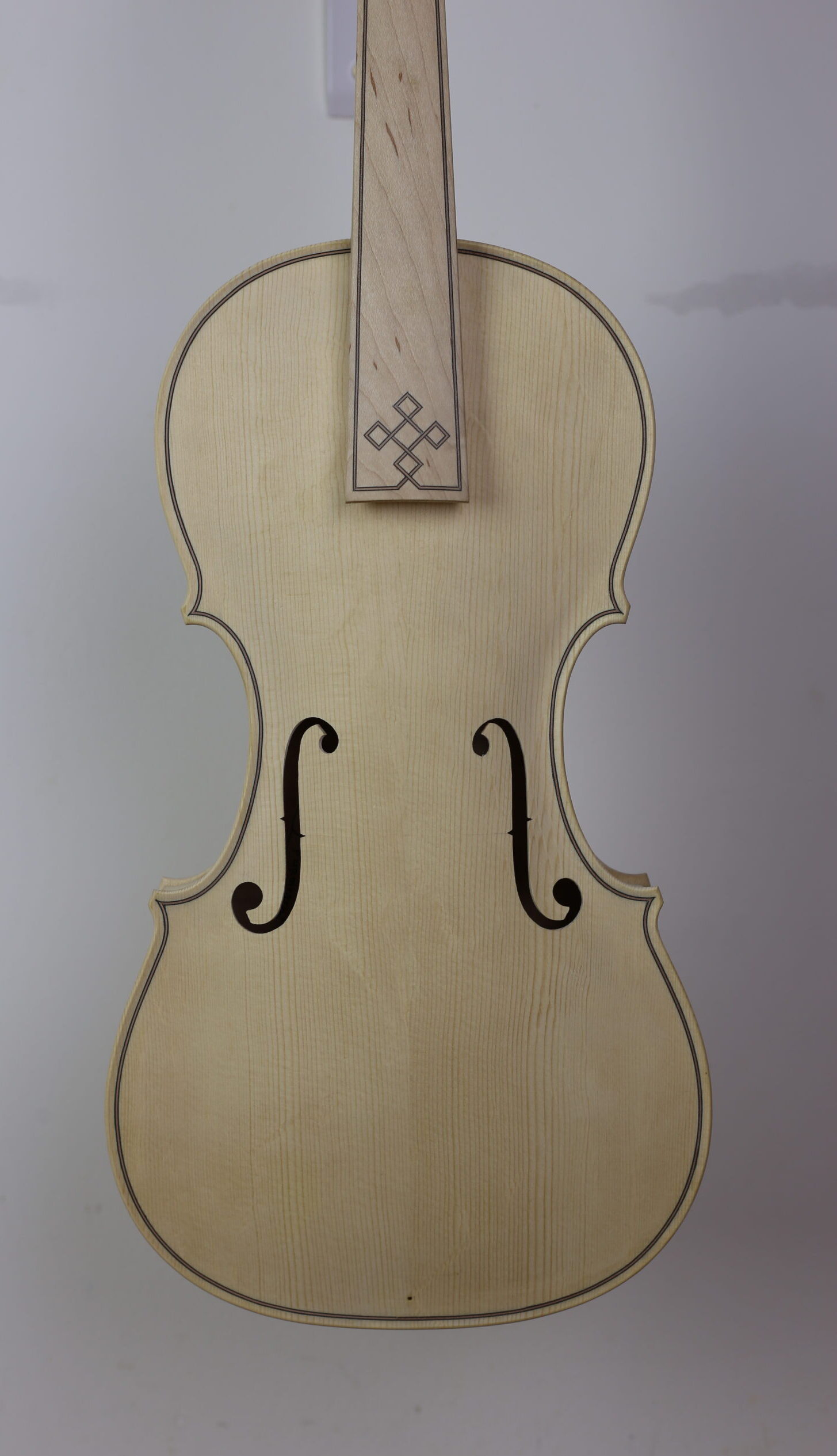
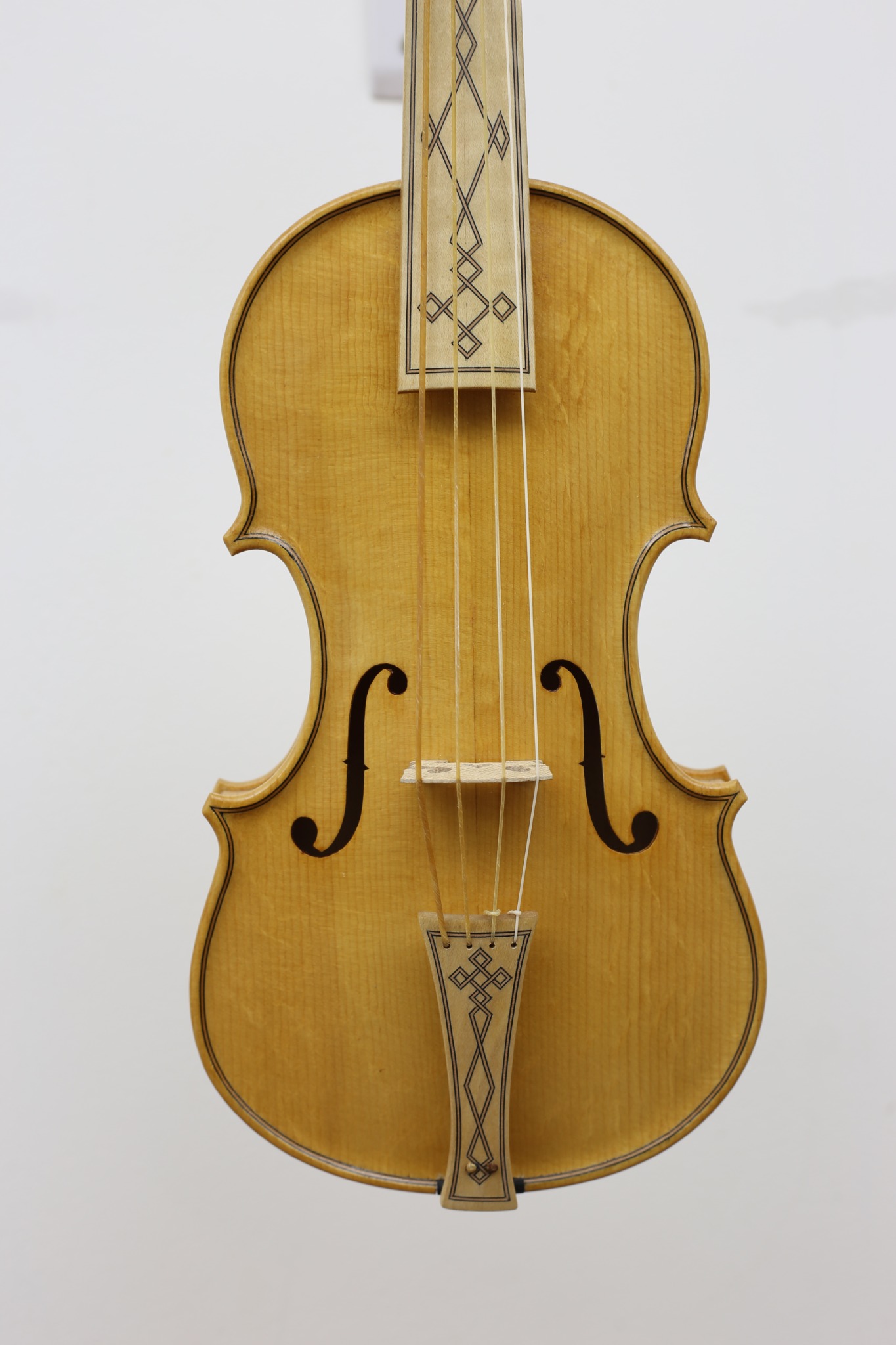
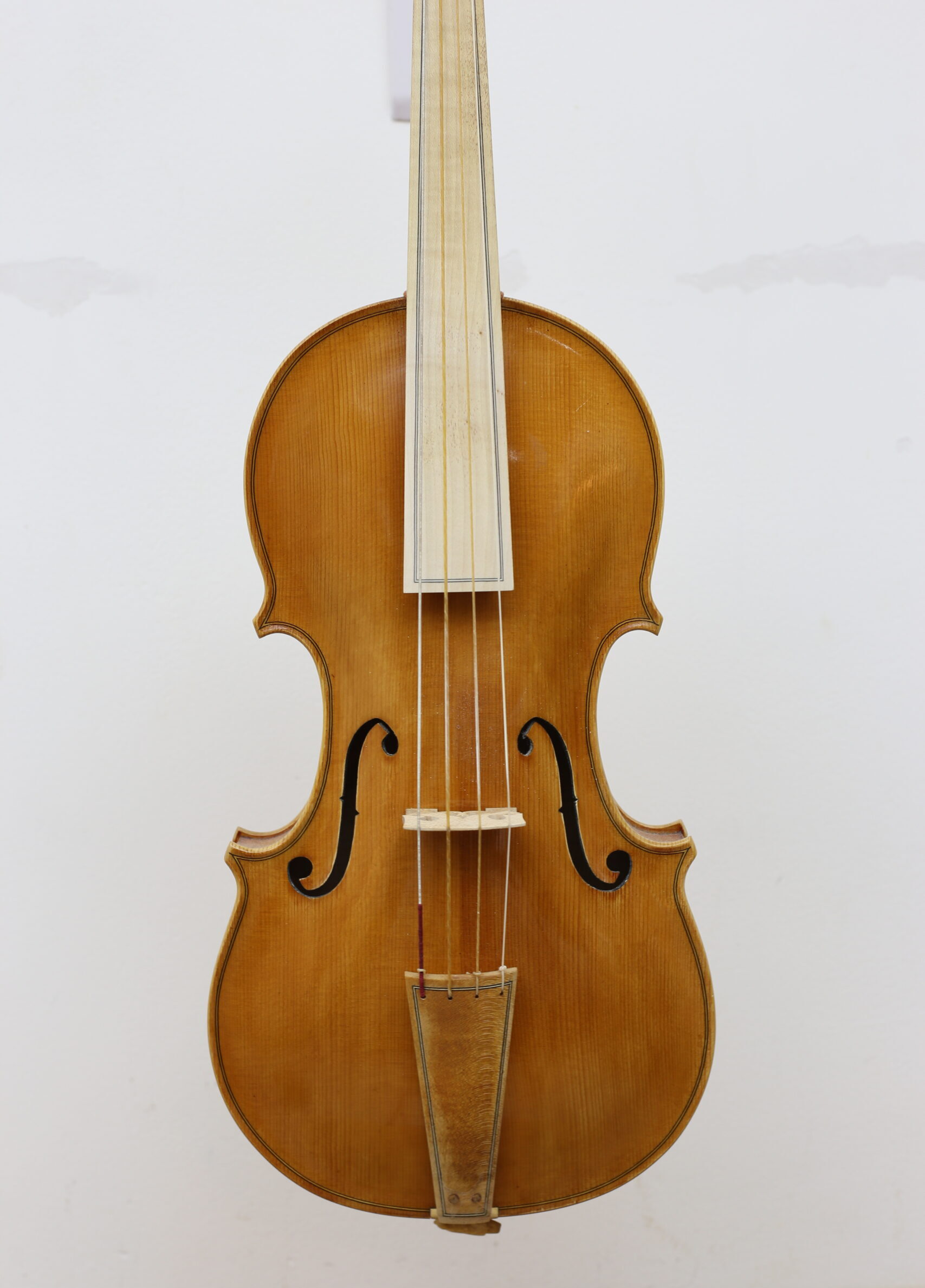
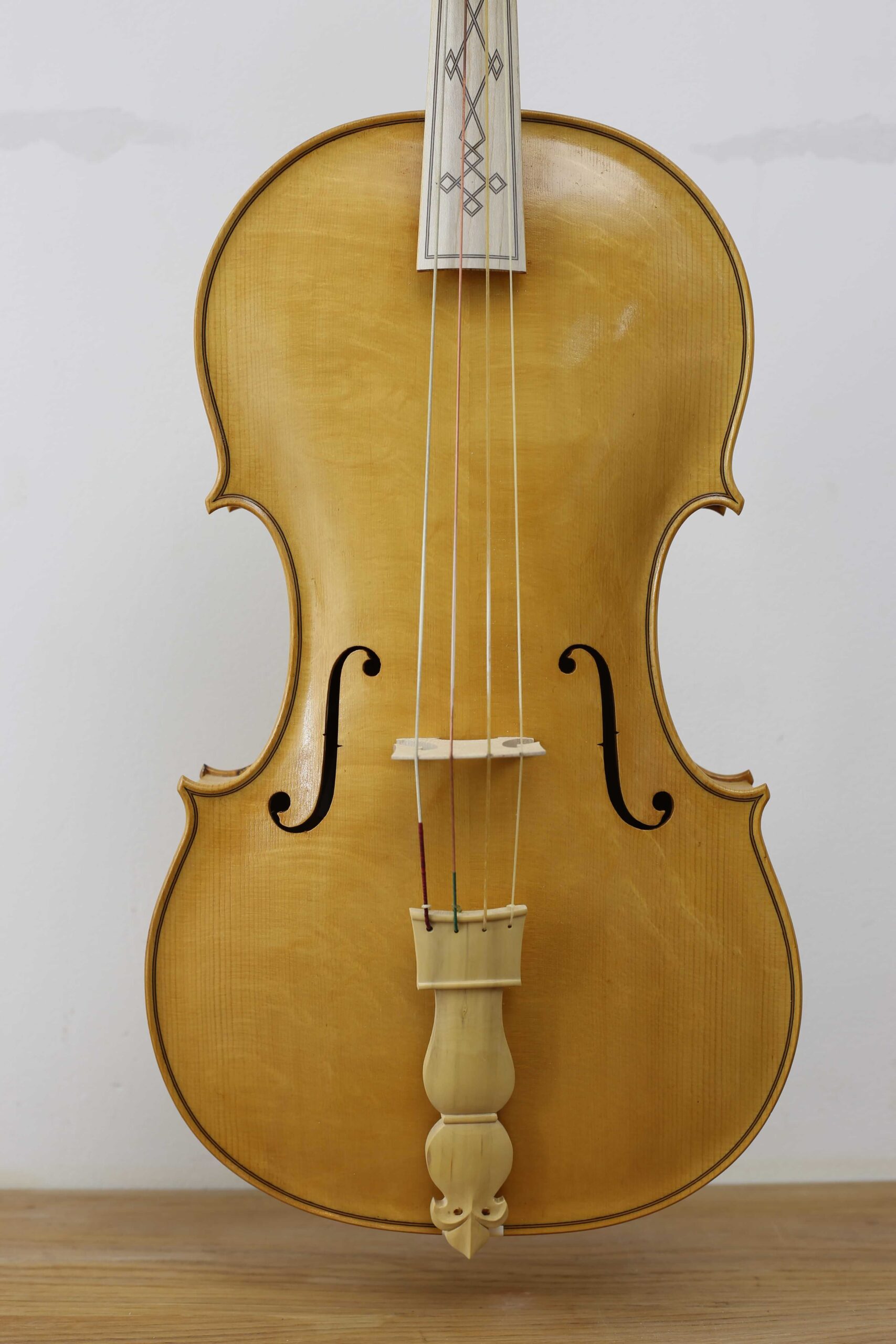
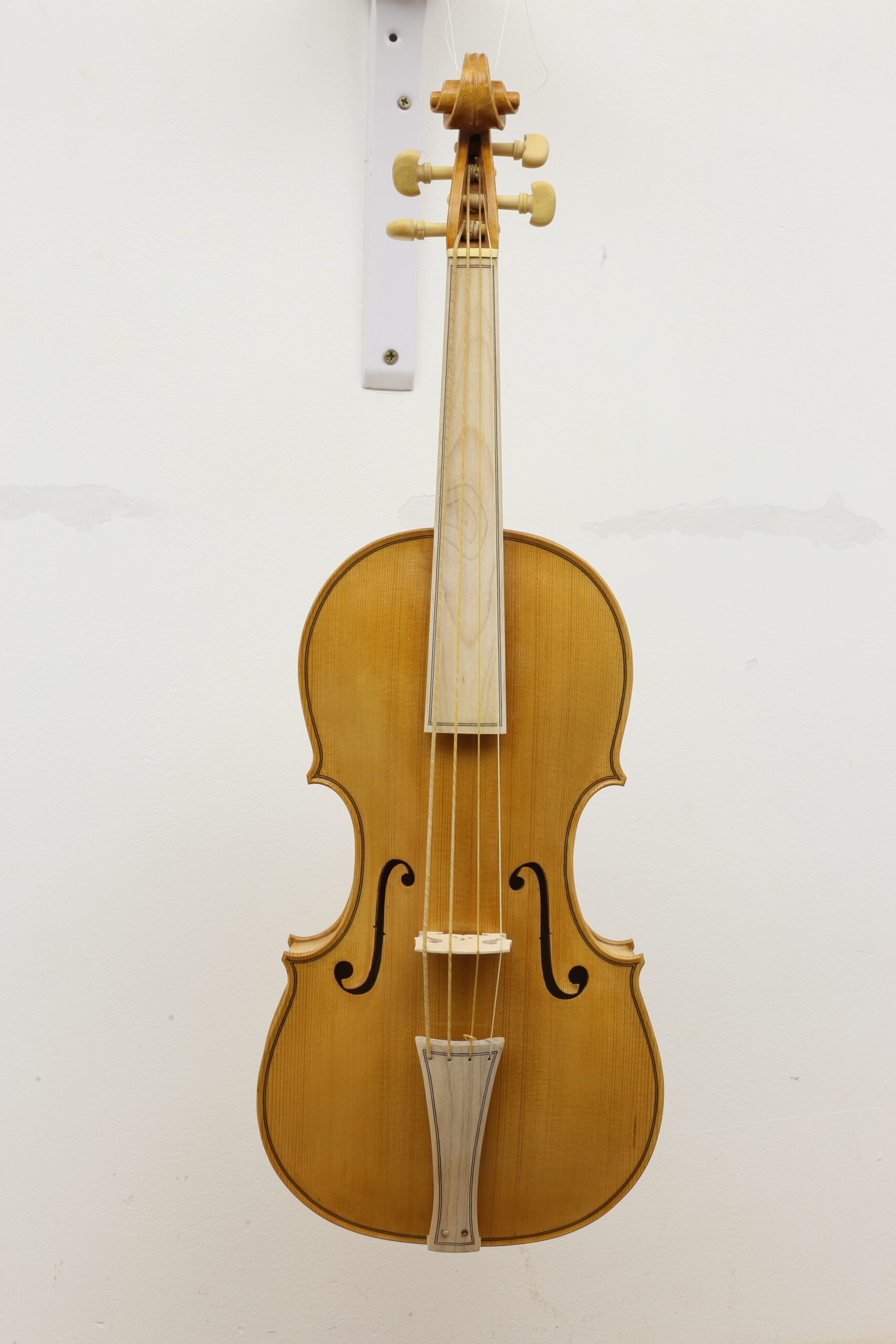
This handcrafted baroque violin is an original design, developed from historical principles while allowing space for personal interpretation.
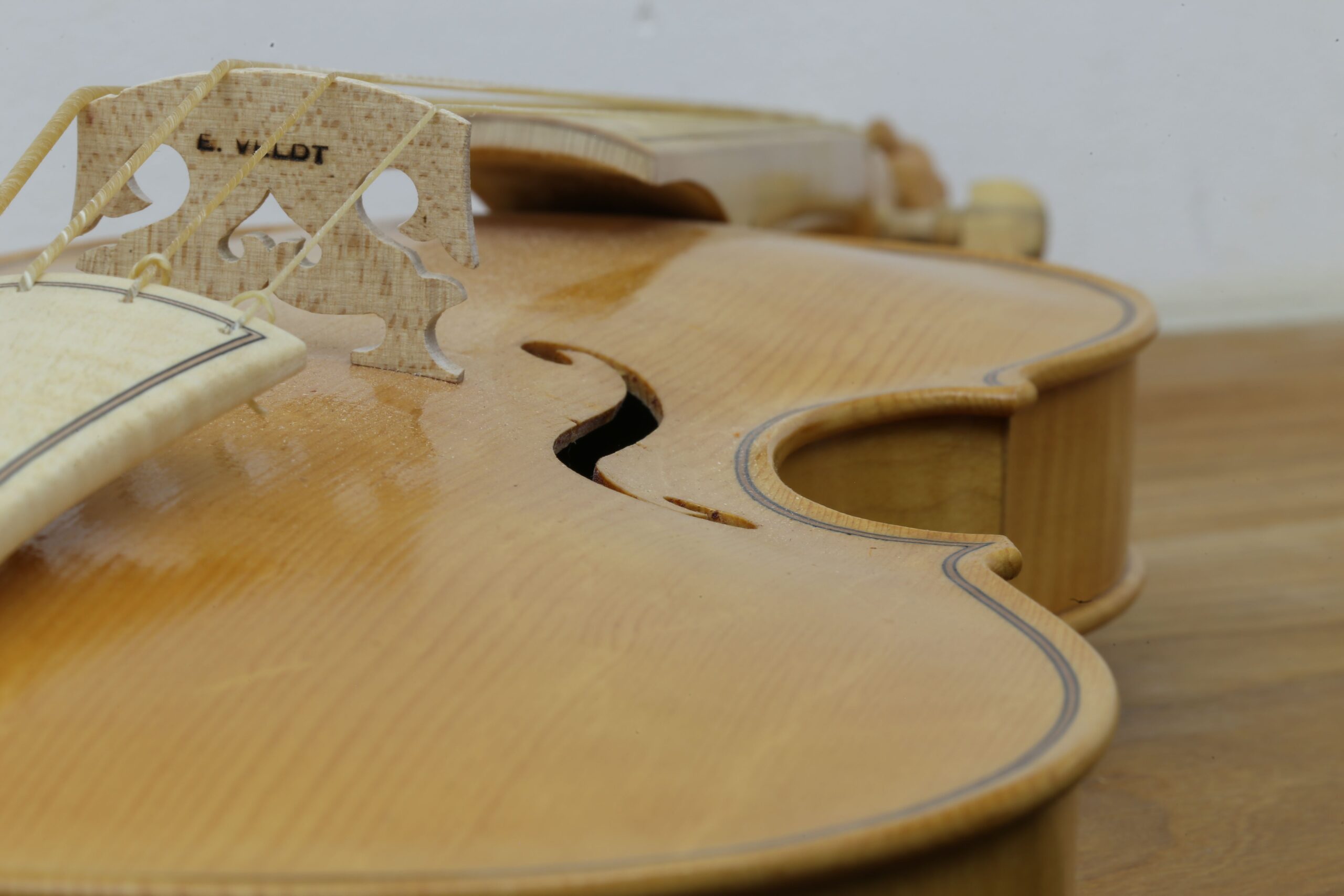
The outline is inspired by a model attributed to Johann Georg Böck, while the f-holes draw from Jacobus Stainer. Beyond these elements, the construction, proportions, and tonal concept are developed freely within the atelier.
“Die Witte” is therefore not a copy of a historical instrument, but an individual voice within the tradition of baroque violin making.
Design and inspiration
While rooted in historical references, this instrument is fundamentally an original interpretation.
- Outline inspired by Johann Georg Böck
- F-holes inspired by Jacobus Stainer
- No direct historical reconstruction
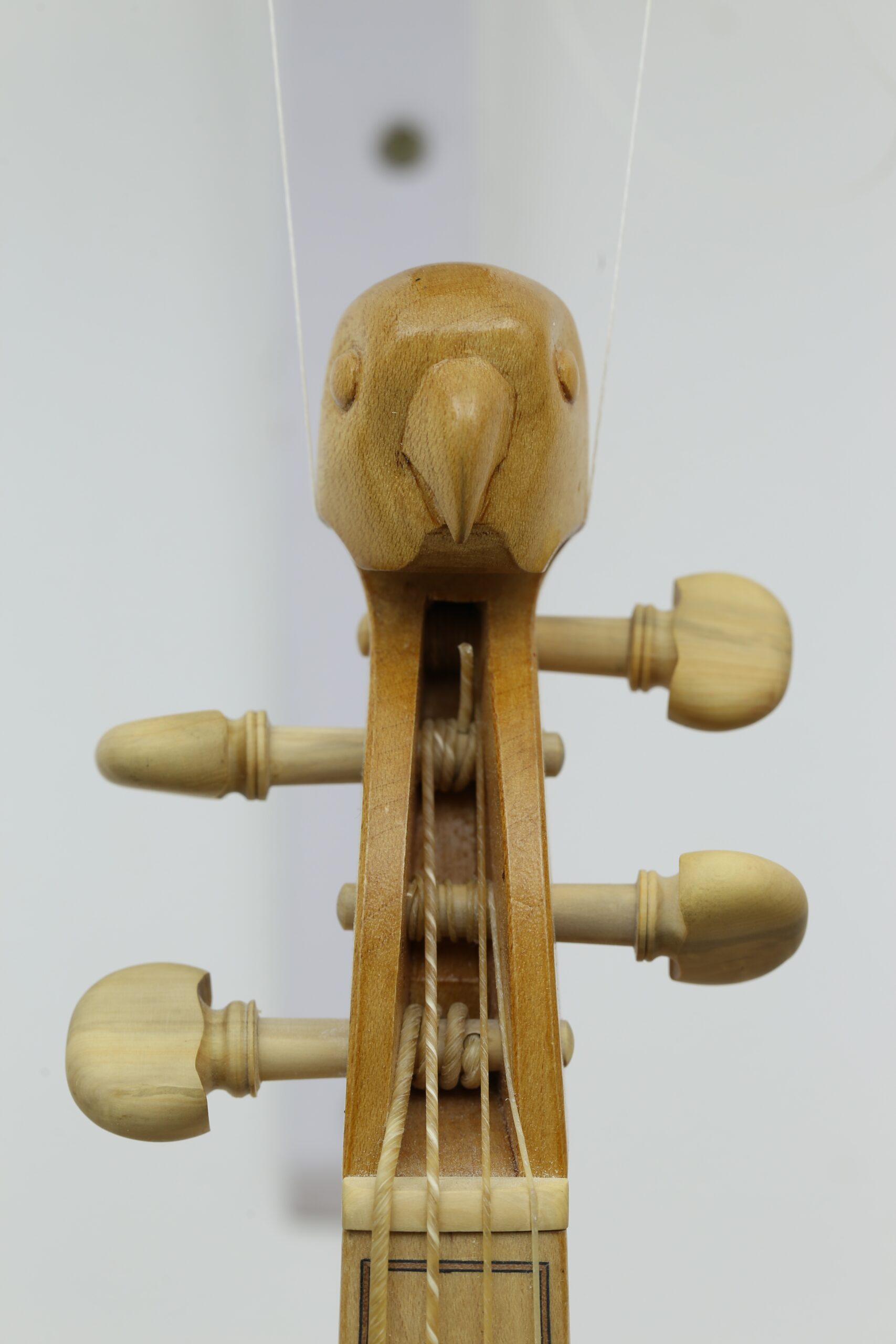
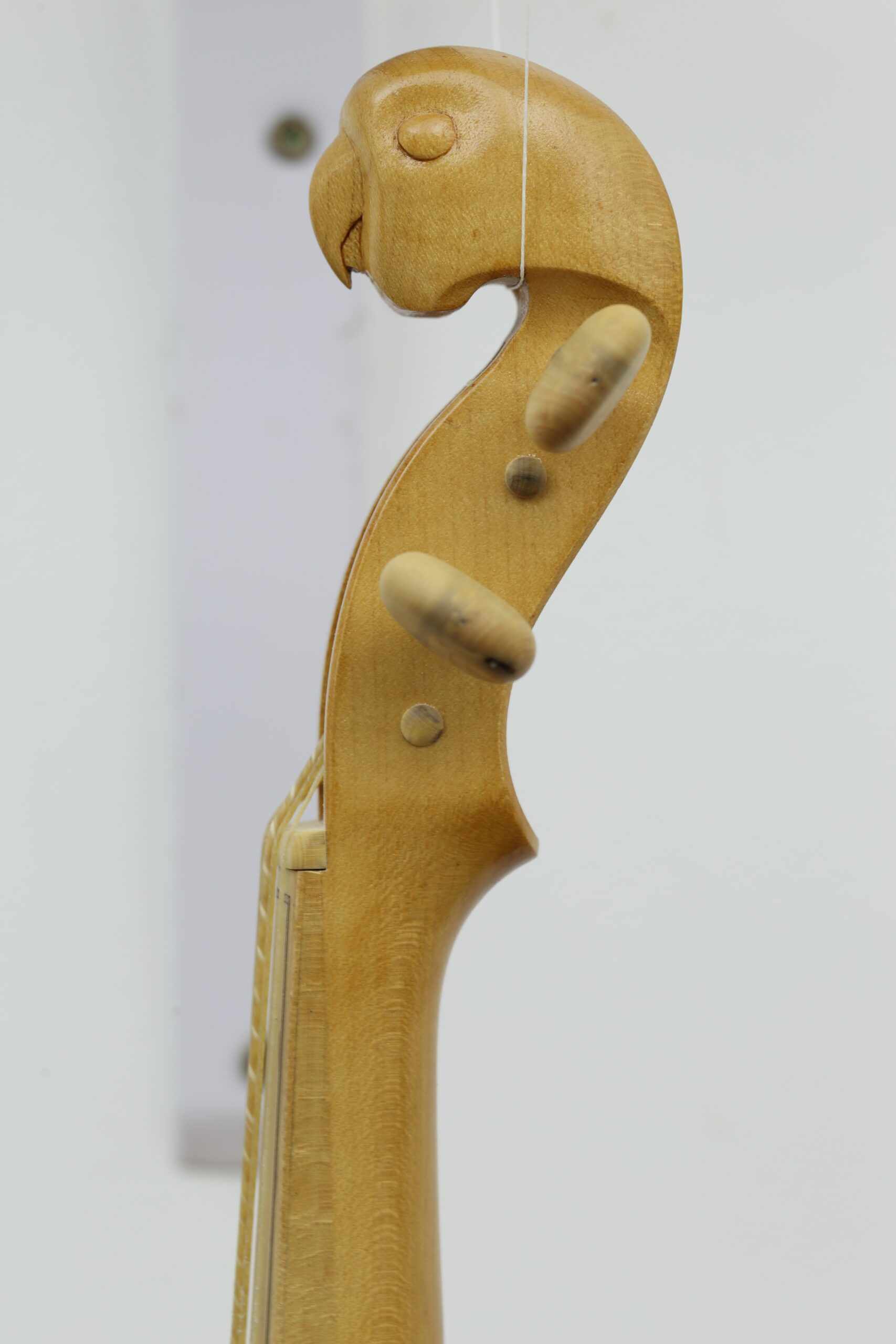
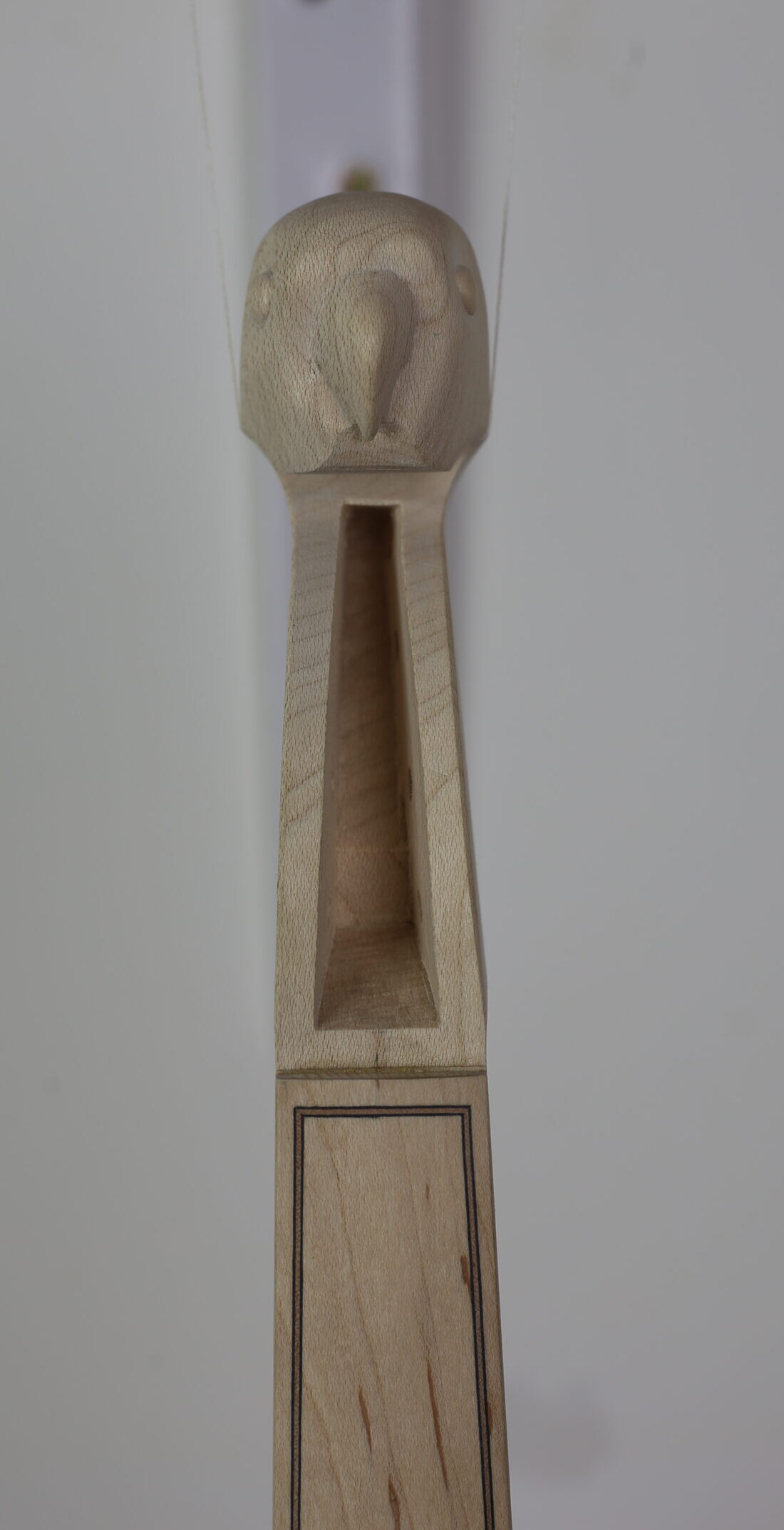
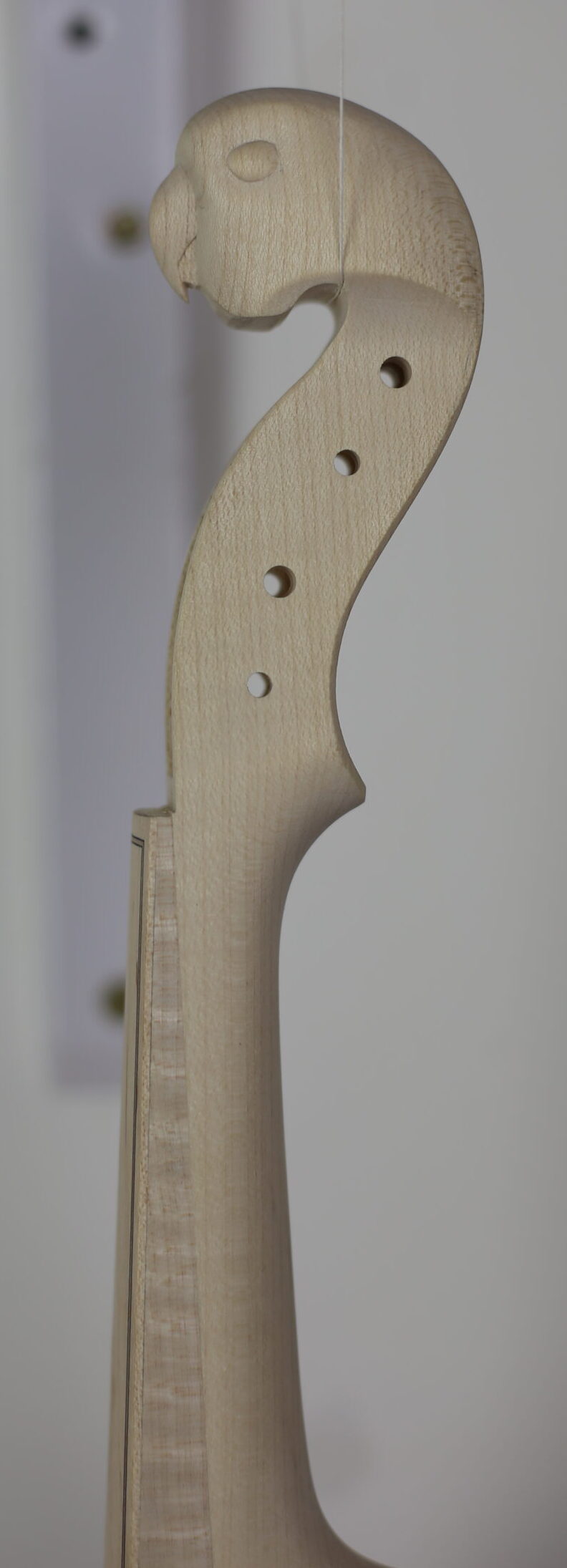
The scroll is a defining feature of this violin. It is carved after the head of a lovebird that is part of the workshop, giving the instrument a deeply personal element.
This detail is not merely decorative, but a deliberate choice to translate something close to us — a constant presence in the workshop — into the instrument itself.
In doing so, the instrument carries not only craftsmanship, but also something we hold dear, preserved in wood and form.
Construction and build
This violin is entirely handmade using traditional baroque techniques, without modern concessions.
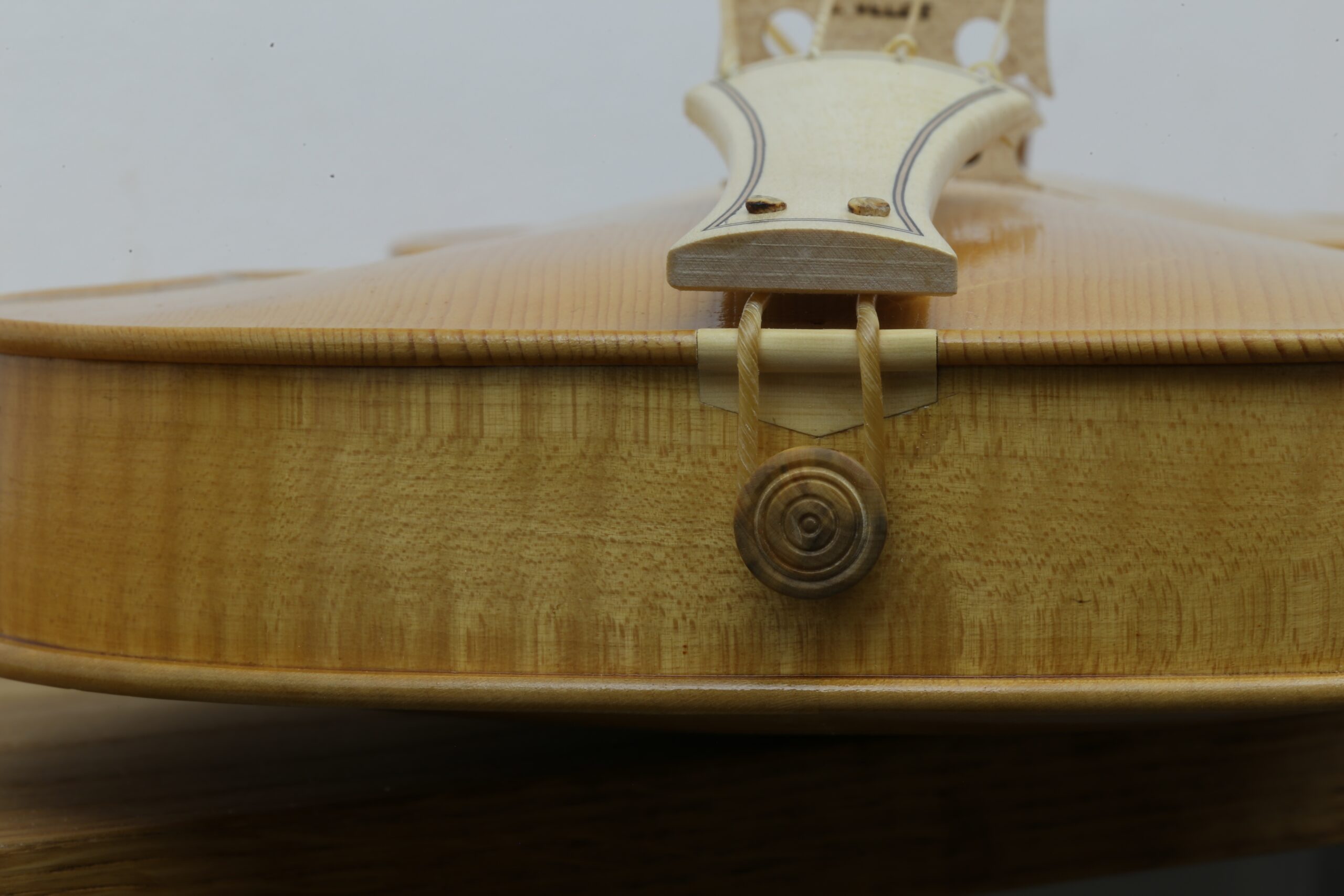
- Nailed neck (authentic baroque construction, not a reconstruction)
- String length: 328 mm
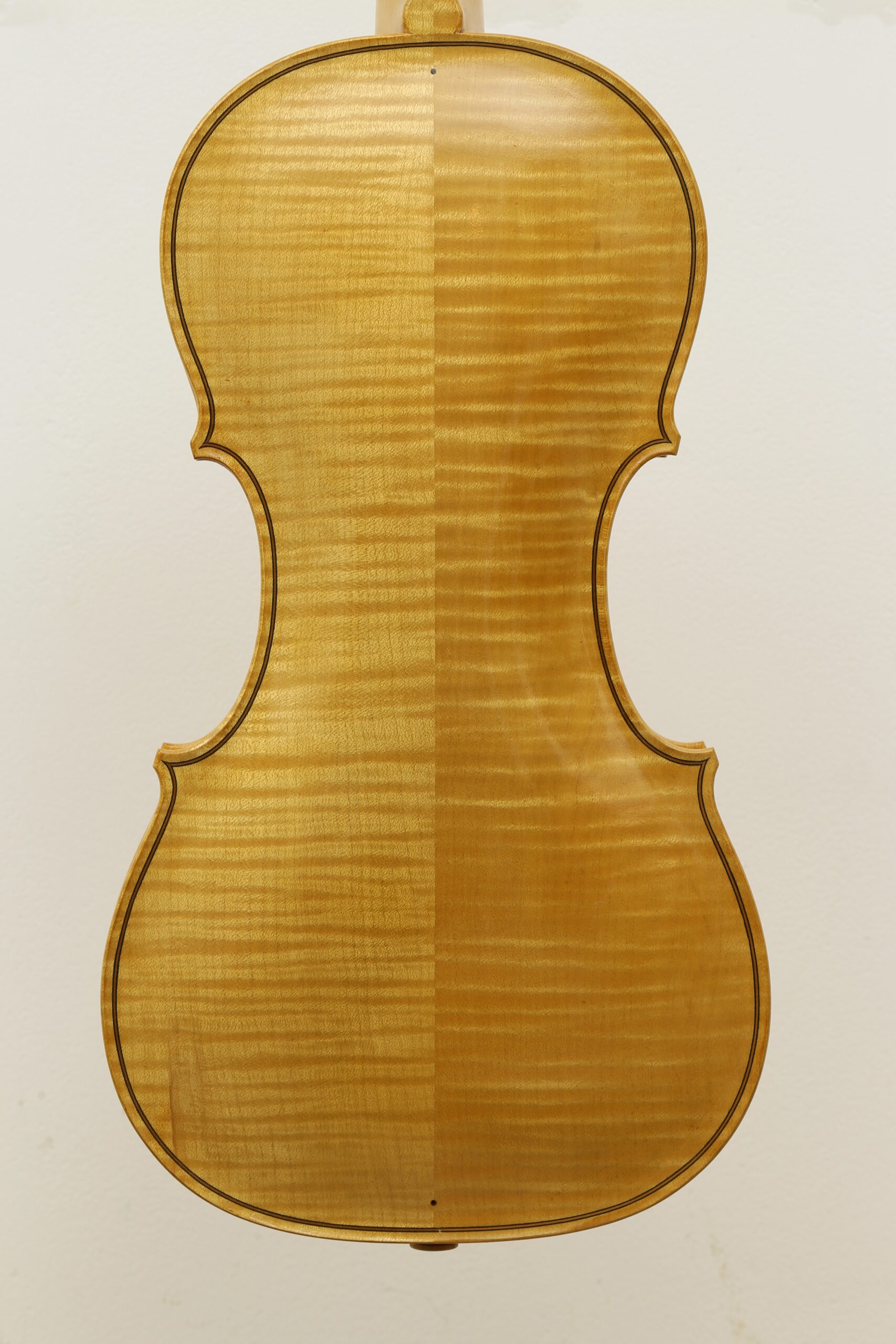
- Back length: 362 mm
- Width: 201 mm
- Weight: approx. 341 grams
Fingerboard and neck
The short fingerboard is made from spruce veneered with maple, contributing to:
- reduced weight
- increased resonance
- direct response
The design follows an Amati-inspired style.
The scroll is fully hand-carved, forming a unique and personal interpretation.
Pegs
The tuning pegs are fully handcrafted by Elise from French boxwood, based on an original design — consistent with the other instruments.
Varnish and finish
The violin is finished with an amber oil varnish (fossil resin) in a blonde color.
This varnish:
- enhances the natural appearance of the wood
- supports resonance
- aligns with historical baroque finishing practices
Setup and sound
- Strings: plain gut (unsplit lamb)
- Bridge: Stradivari style
Sound character
This instrument has a distinctly open and subtle tonal character:
- open and breathing
- light and responsive
- restrained, yet present
- highly sensitive to nuance
It offers a sound that supports expression without forcing projection.
Intended for
This violin is particularly suited for:
- baroque specialists (Historically Informed Performance)
- ensemble and orchestral players
- musicians seeking a supportive yet expressive instrument
Especially suitable for players who value blend, color, and nuance within an ensemble.
Craftsmanship and approach
For this instrument, materials were deliberately chosen that fall outside typical expectations — including a top plate with different thickness and grain characteristics than traditionally used for this type of violin.
This required a more exploratory approach to construction and tonal adjustment, pushing beyond standard boundaries while remaining grounded in baroque principles.
“Die Witte” reflects the idea that within tradition, there is room for experimentation and personal expression.
Specifications
- Model: Eveldt – “Die Witte” (Original Model)
- Period: 21st century
- Size: 4/4
- Price: €5000