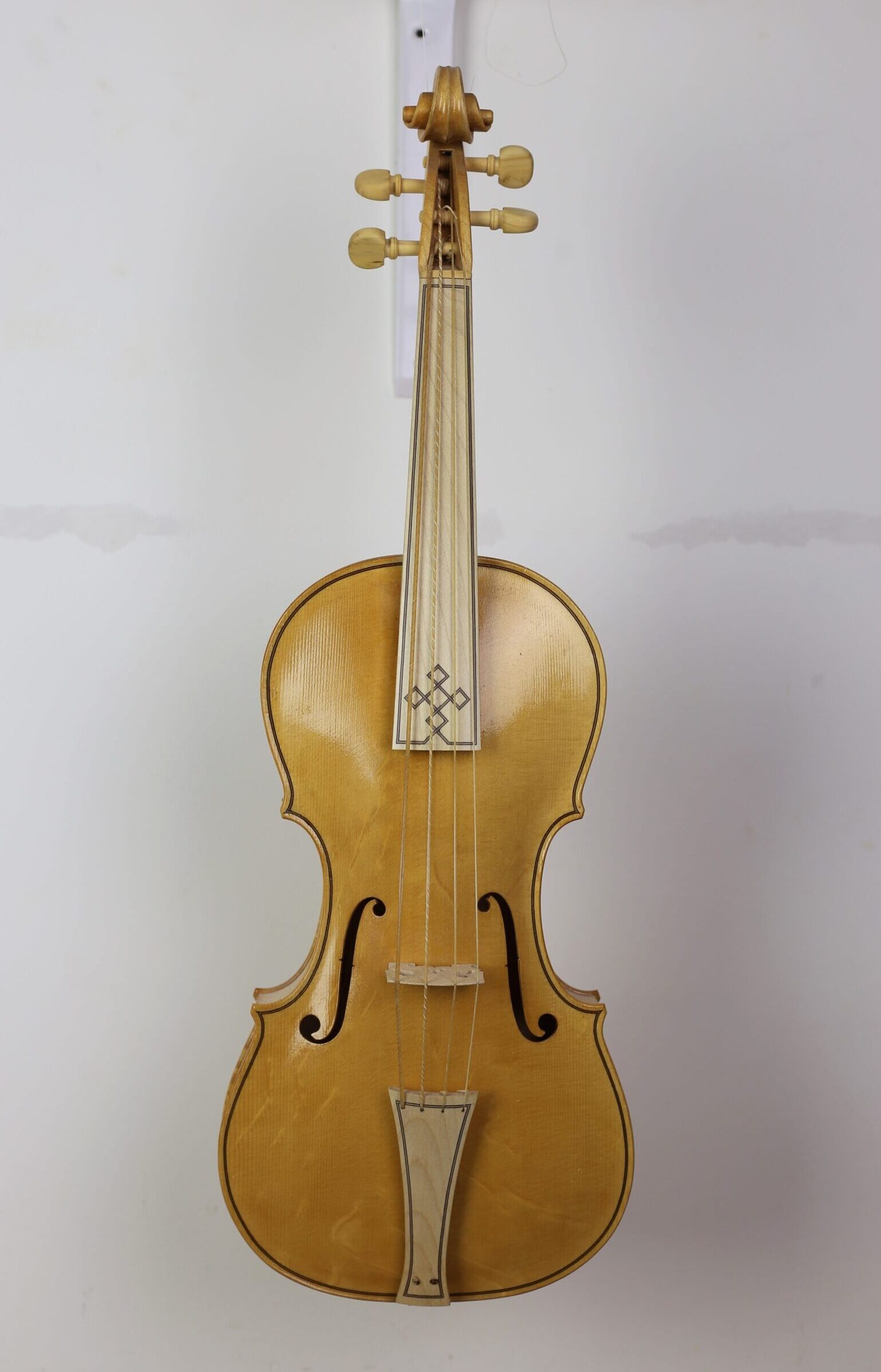
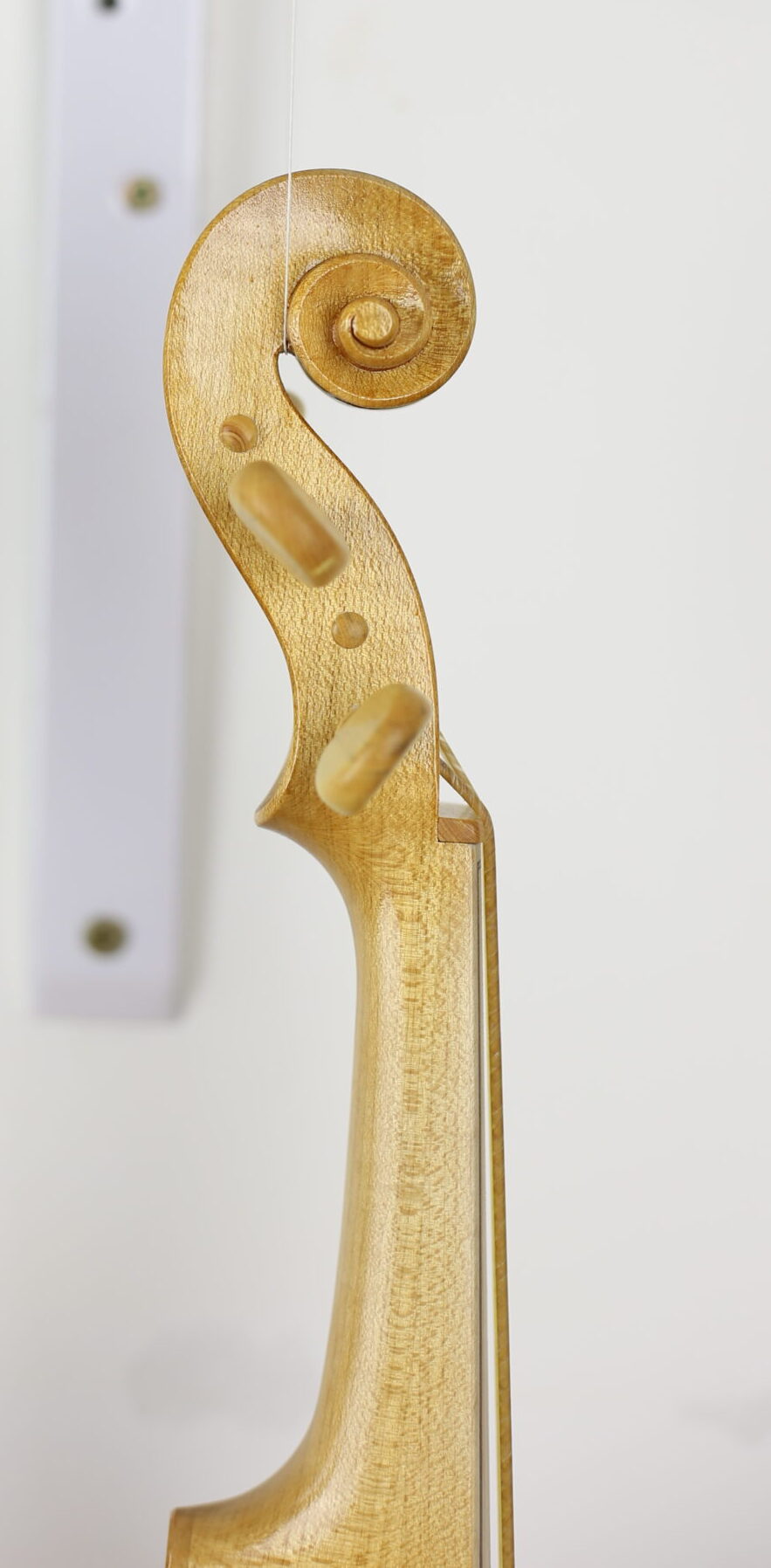
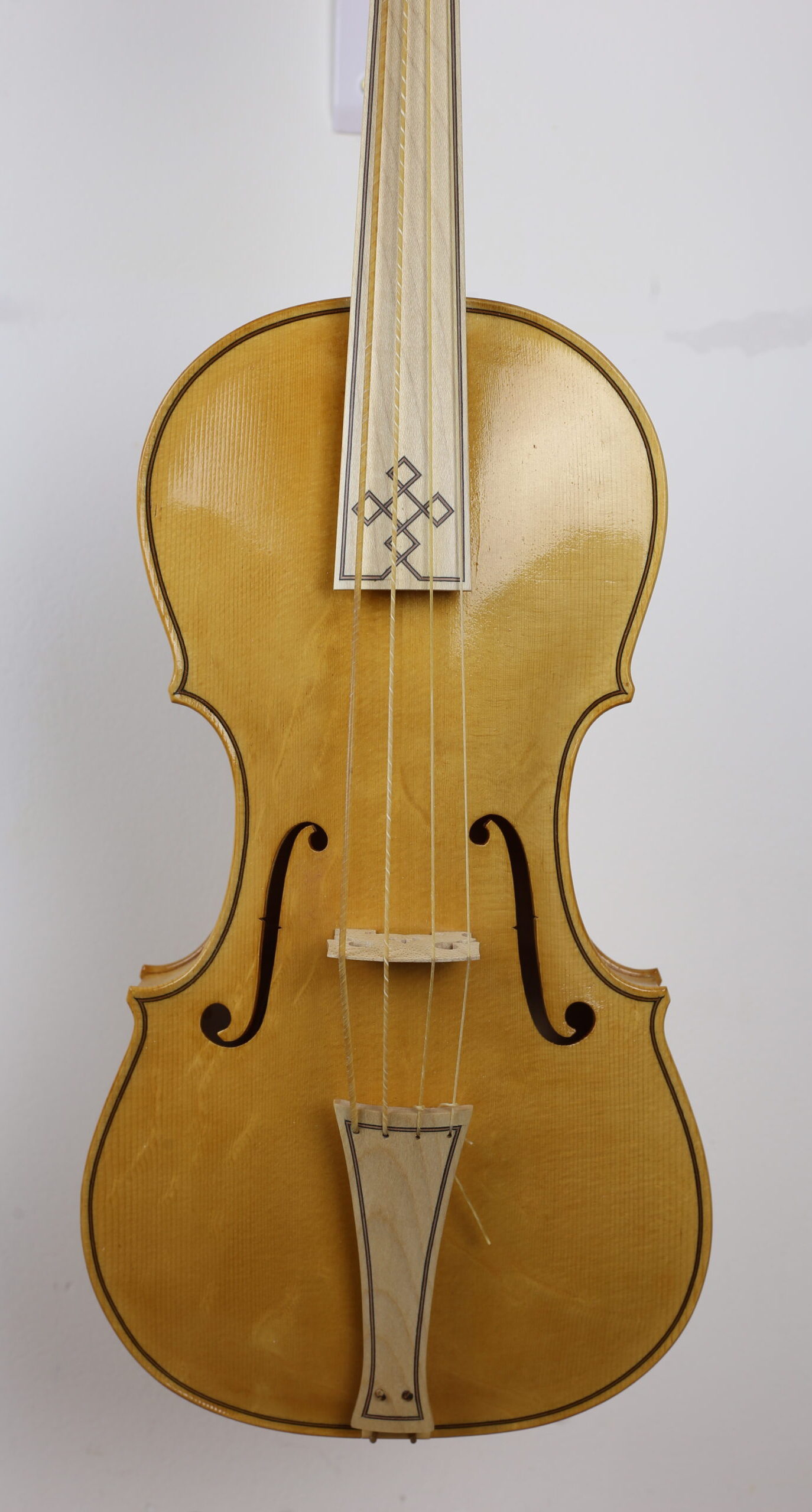
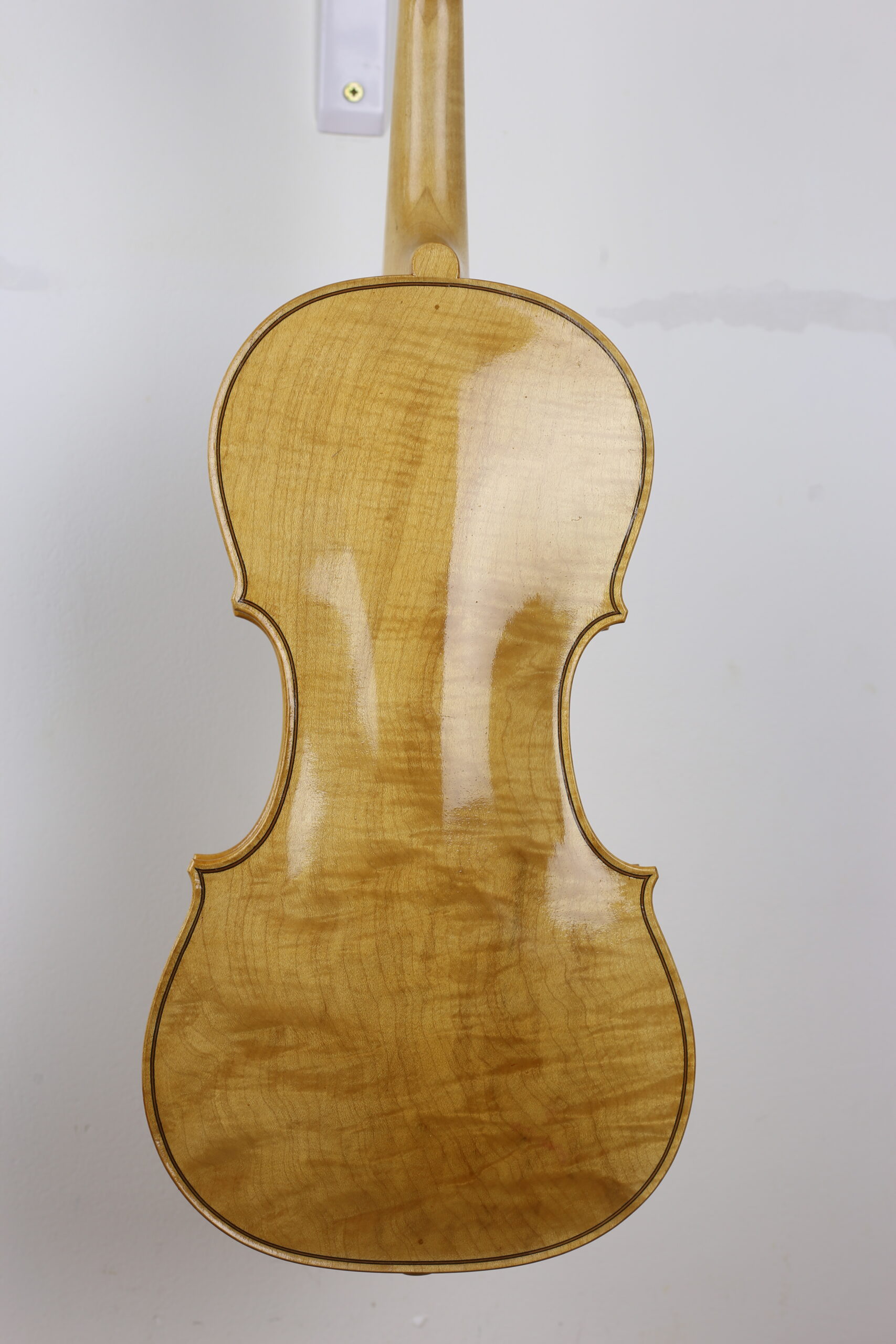
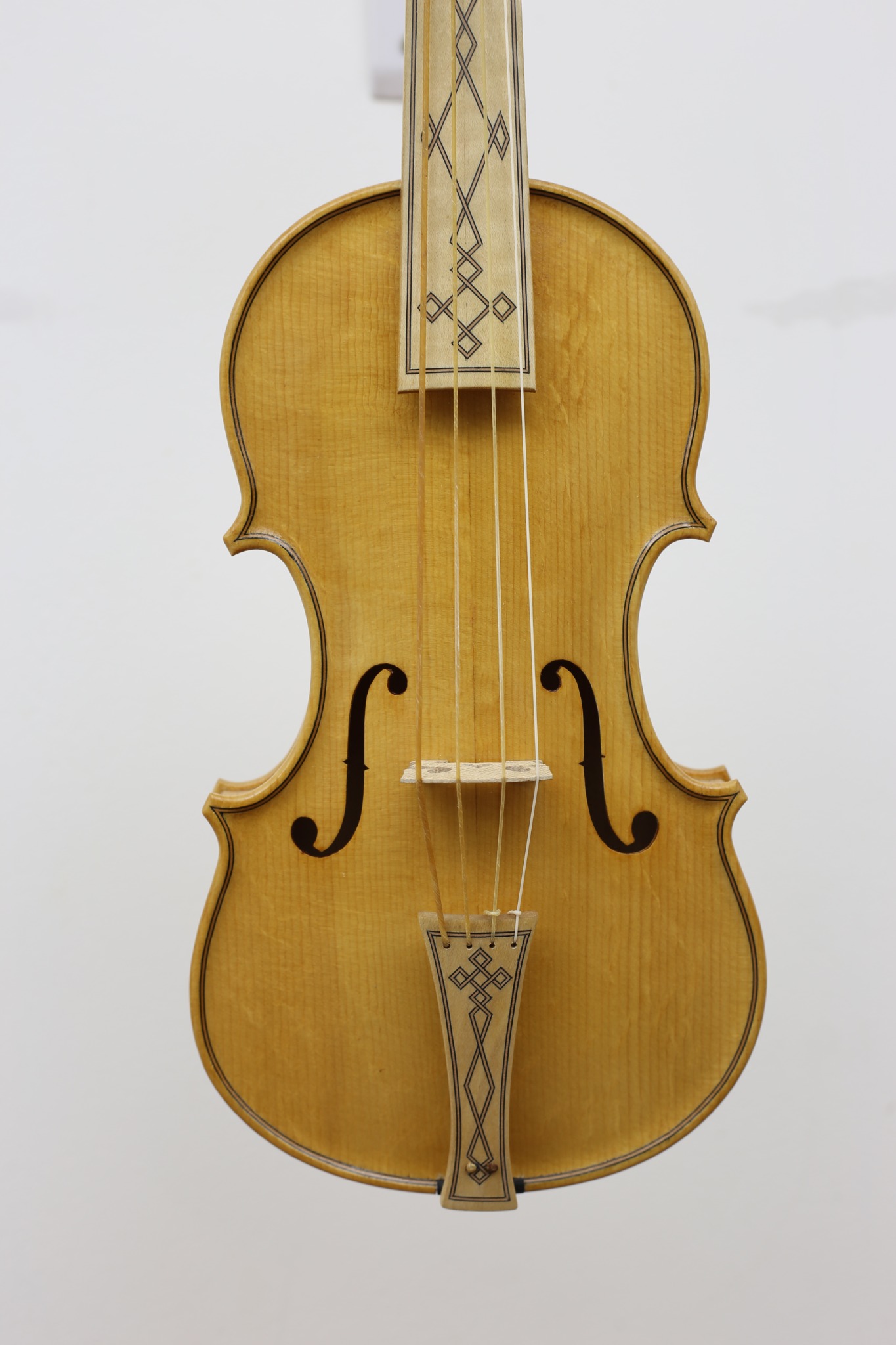
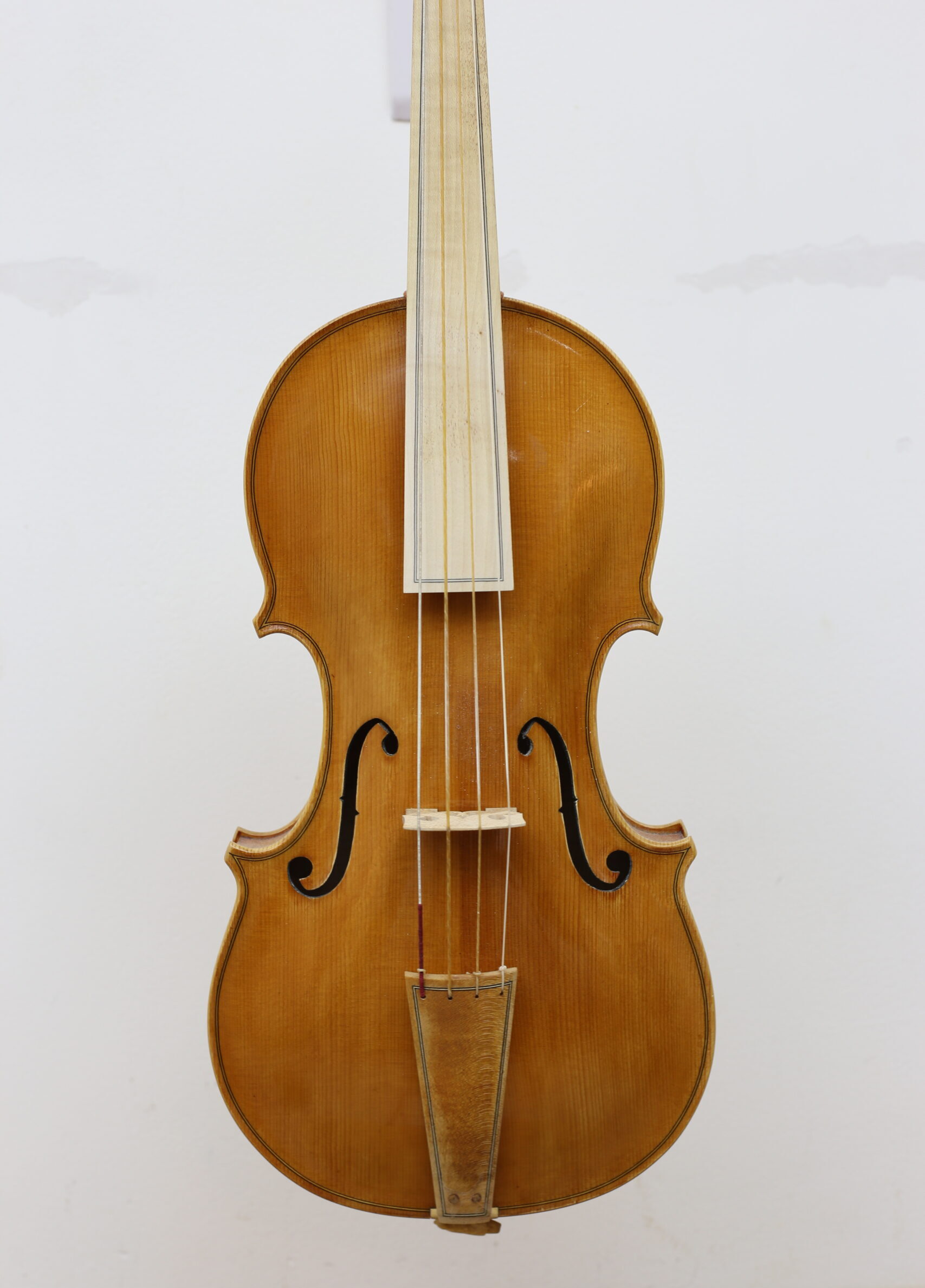
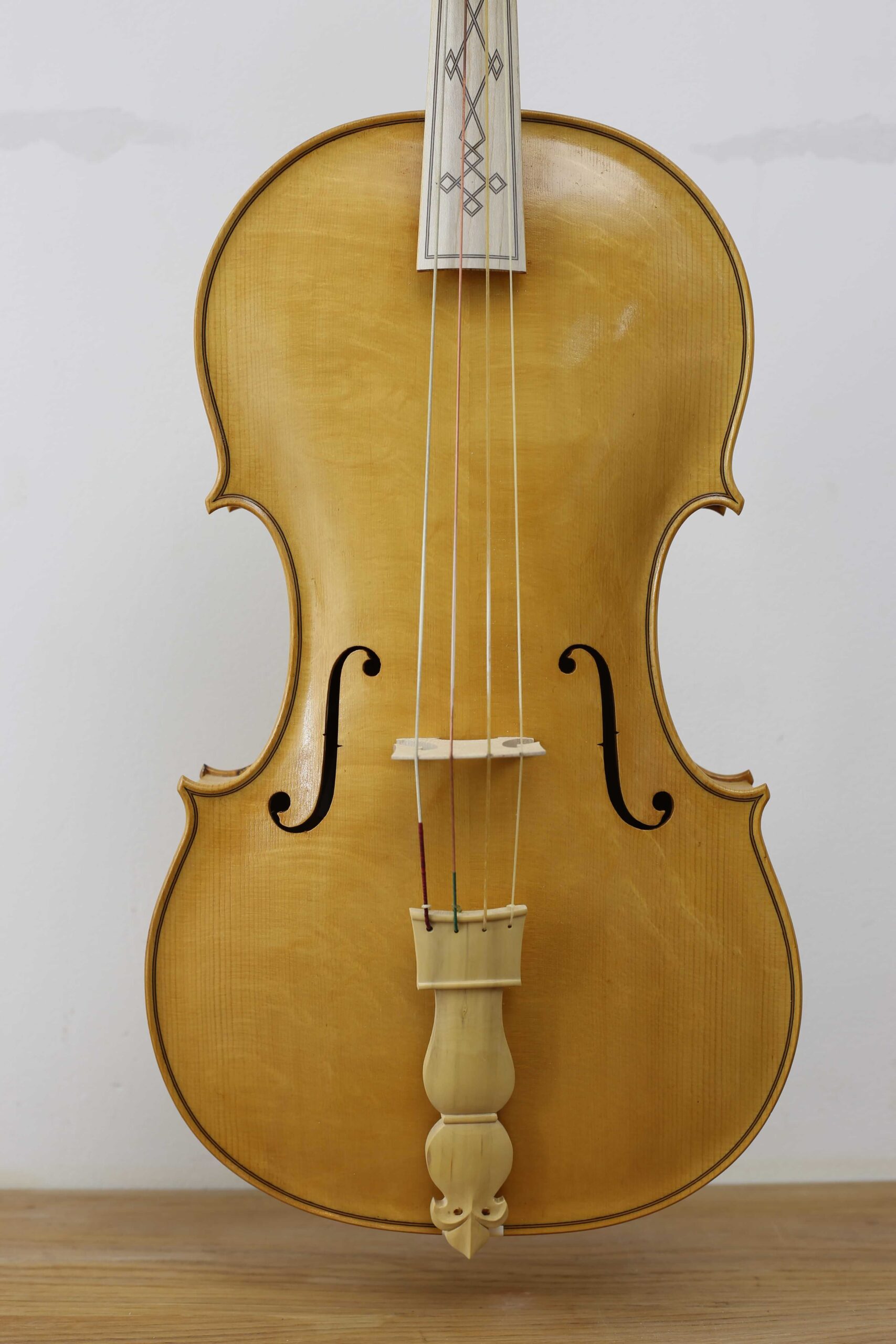
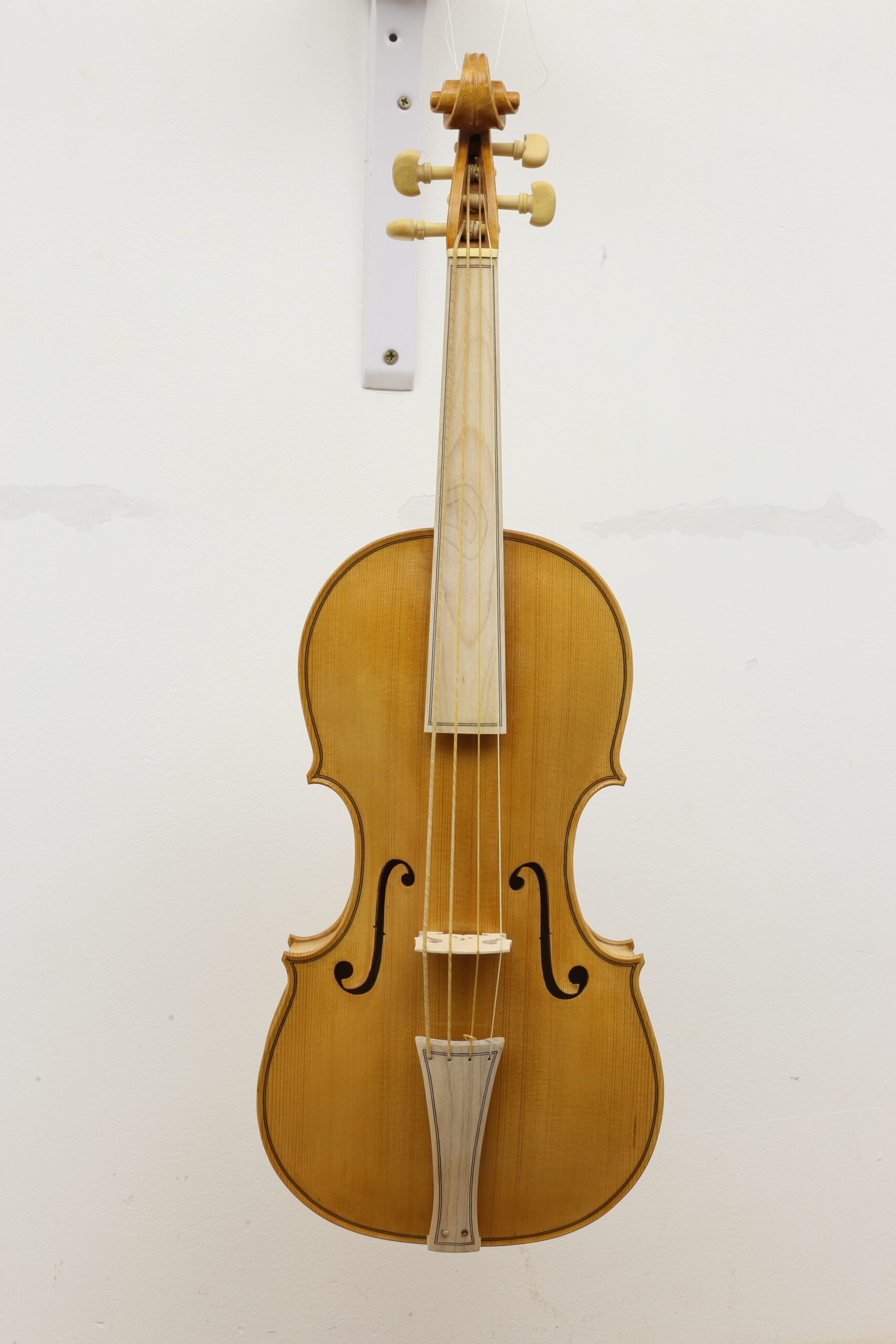
This handcrafted baroque violin is inspired by a model attributed to Johann Georg Böck, a relatively unknown maker from the region of Grafschaft Glatz (present-day Wölfelsdorf). Despite the limited historical documentation, his work stands out for its eccentric yet refined design language.
This instrument translates that rare stylistic approach into a contemporary interpretation, grounded in historical principles while embracing a strong individual character.
Historical foundation – Grafschaft Glatz
This model originates from Grafschaft Glatz, a historical region that was part of the Bohemian Crown within the Holy Roman Empire. During the 17th century, a regional violin-making tradition developed here, despite the political and social turbulence of the time.
The work of Johann Georg Böck is notable for its unconventional proportions and form. This violin draws from that approach, incorporating key features such as:
- an elongated middle section
- a relatively narrow upper bout
- moderately high arching
Together, these elements create a visually and tonally distinctive instrument.
Construction and build
This violin is entirely handmade using traditional baroque techniques, without modern concessions.
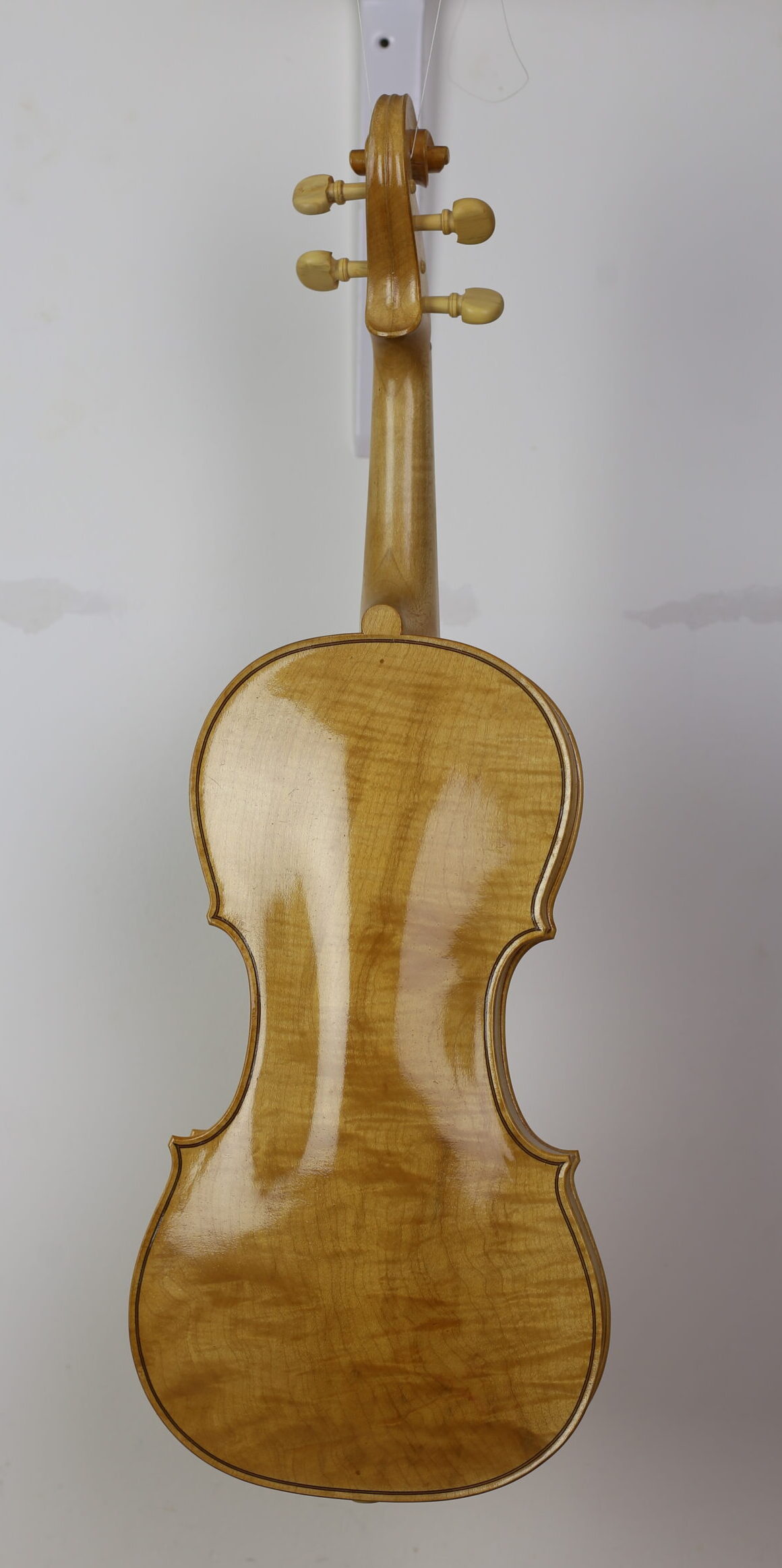
- Nailed neck (authentic baroque construction, not a reconstruction)
- String length: 325 mm
- Back length: 363 mm
- Width: 201 mm
- Weight: approx. 331 grams
The construction follows historical principles while allowing for asymmetry and variation—characteristic of this regional style.
Fingerboard and neck
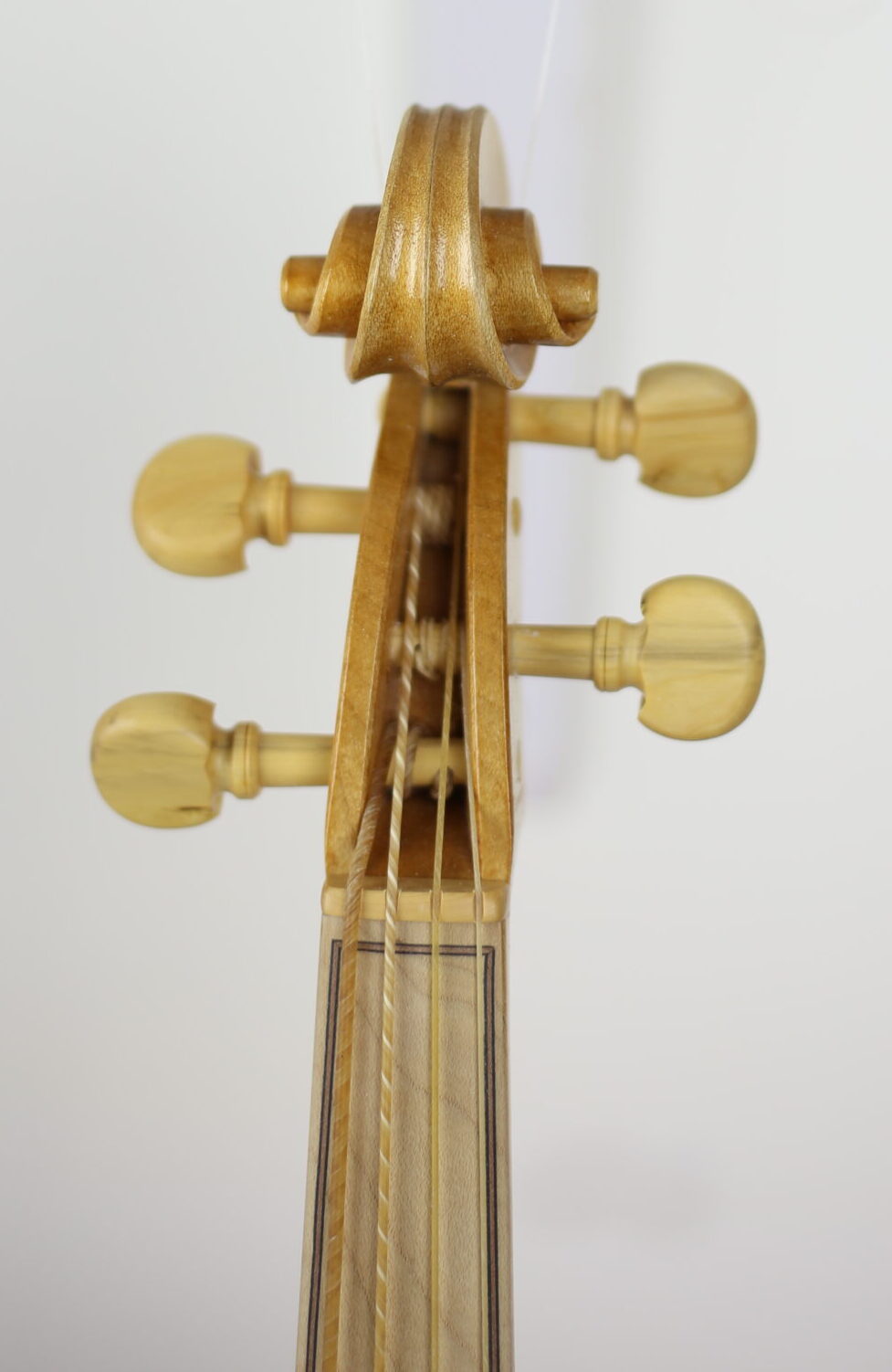
The short fingerboard is made from spruce veneered with maple, contributing to:
- reduced weight
- increased resonance
- direct response
The design of the fingerboard is inspired by Amati examples.
Pegs
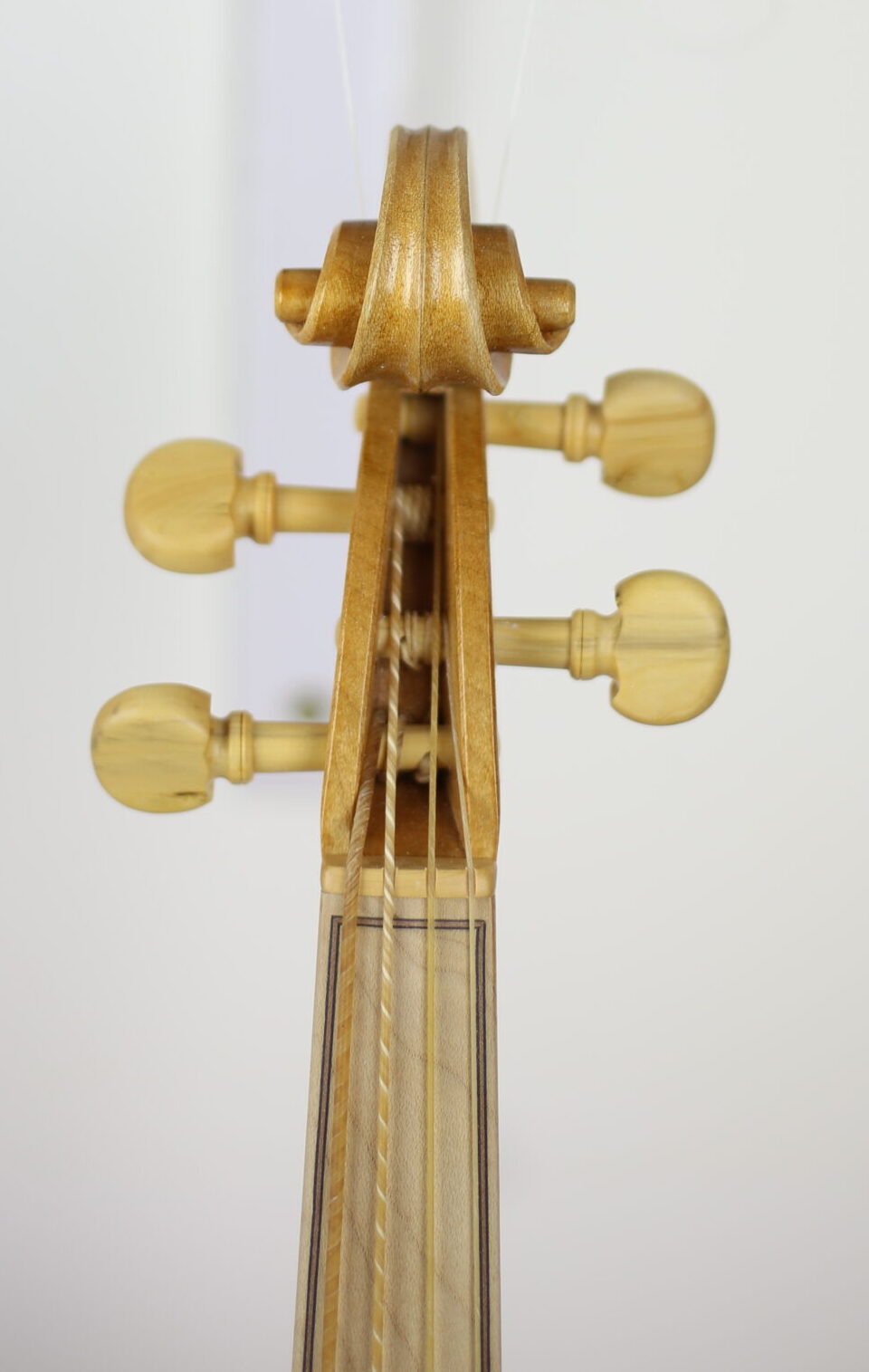
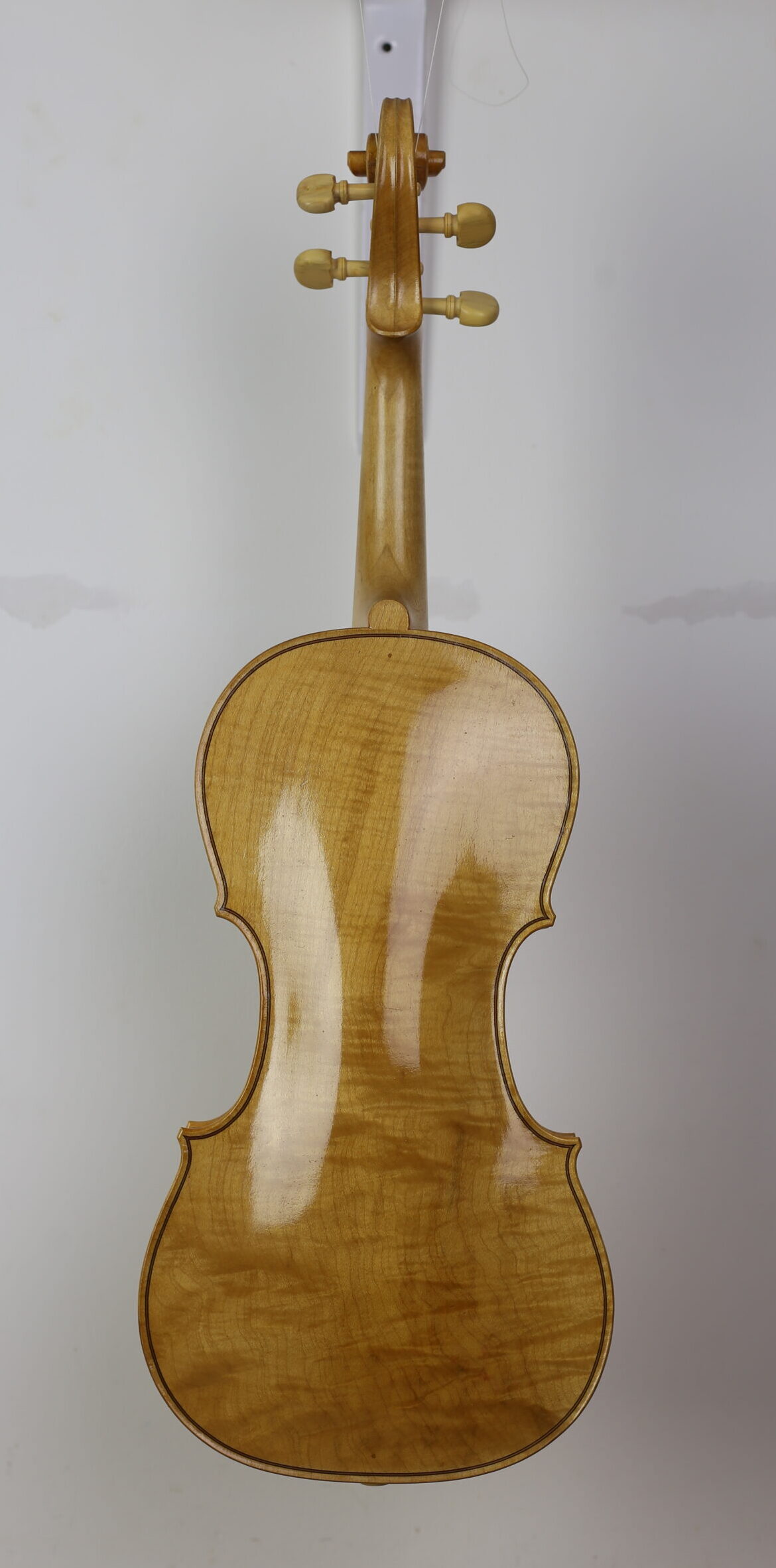
The tuning pegs are fully handcrafted by Elise from French boxwood, based on an original design—consistent with the other models and tailored to the instrument.
Varnish and finish
The violin is finished with an amber oil varnish (fossil resin) in a blonde color.
This varnish:
- enhances the natural appearance of the wood
- supports resonance
- aligns with historical baroque finishing practices
Setup and sound
- Strings: plain gut (unsplit lamb)
- Bridge: Stradivari style
Sound character
This instrument has a powerful and distinctive voice:
- very loud and direct
- strong, carrying bass
- unique tonal identity
It is designed to project clearly within and above an ensemble.
Intended for
This violin is suited for:
- baroque specialists (Historically Informed Performance)
- orchestral players seeking greater projection
- musicians who want an instrument with a strong, recognizable voice
Particularly suitable for players who aim to stand out within an ensemble setting.
Craftsmanship and philosophy
This model demonstrates that historical violin making is not always about symmetry or standardization.
In this instrument, asymmetry plays a deliberate role, not as a flaw, but as part of a distinct aesthetic and acoustic approach. The result is an instrument that is both visually and tonally individual, without sacrificing refinement.
As with all instruments, every component is handcrafted, with full attention to construction, materials, and sound.
Specifications
- Model: Grafschaft Glatz / Wölfelsdorf (German baroque violin)
- Inspired by: Johann Georg Böck
- Period: 18th century
- Size: 4/4
- Price: €5000