Out of stock
€ 5.000,00
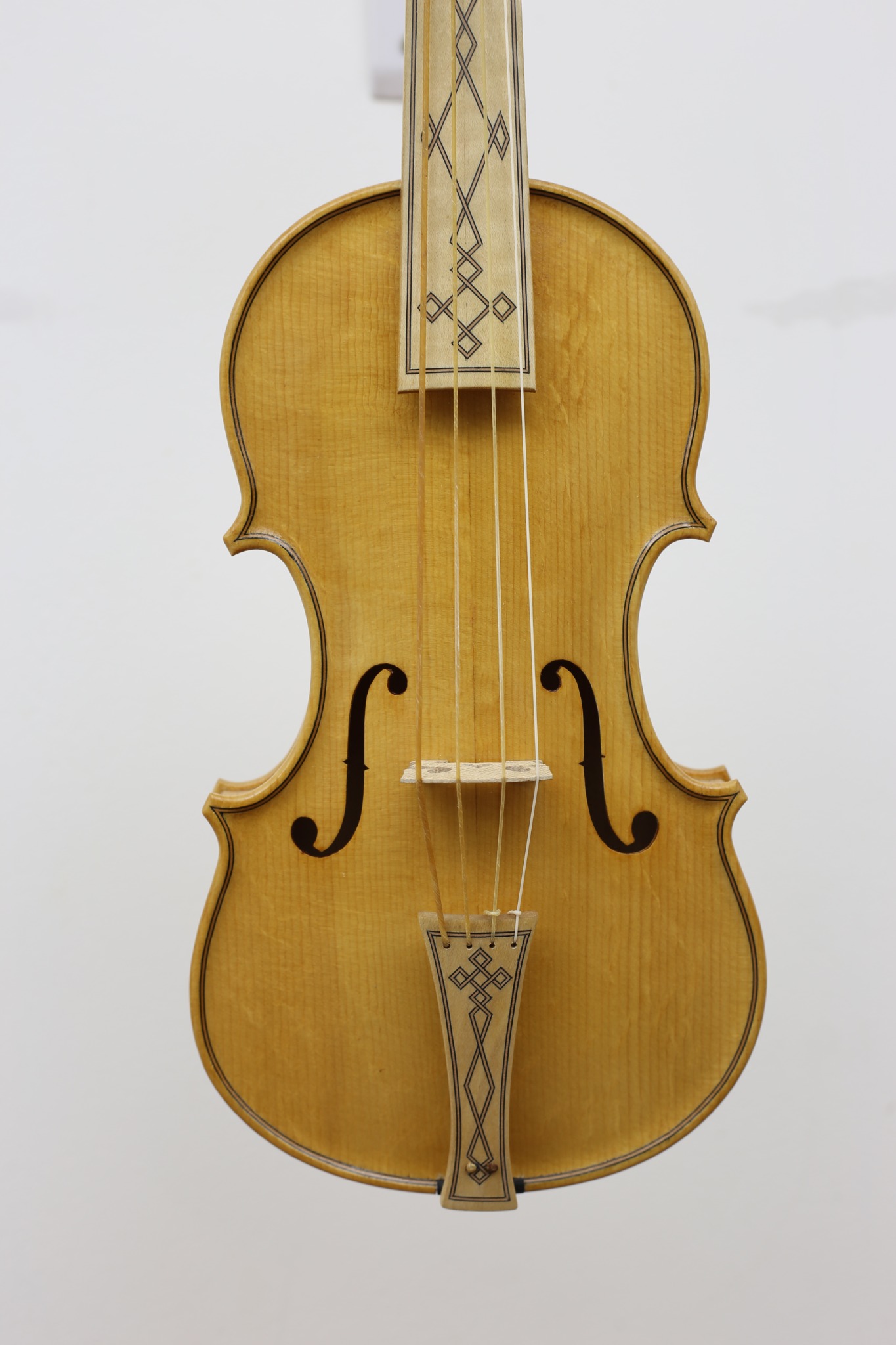
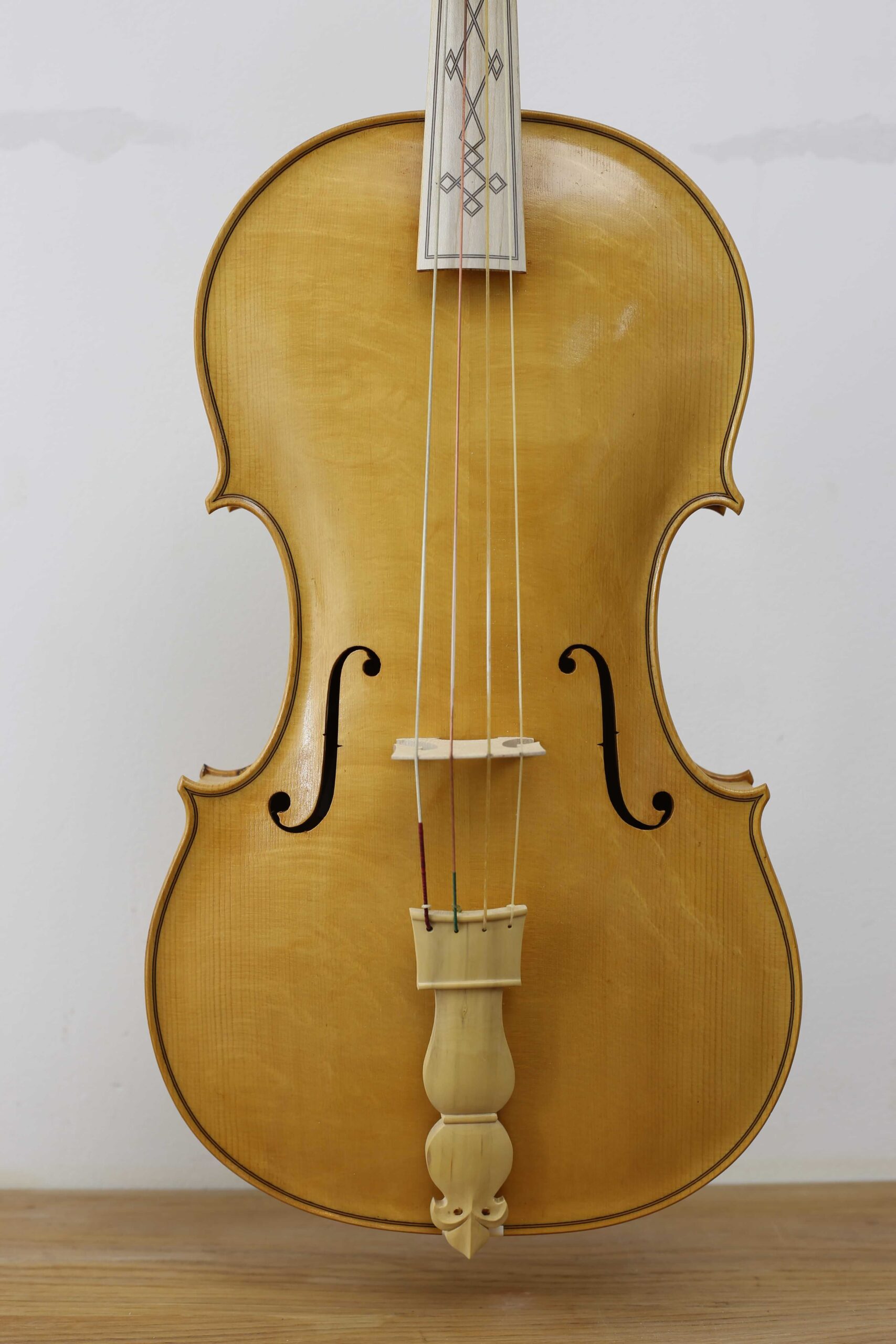
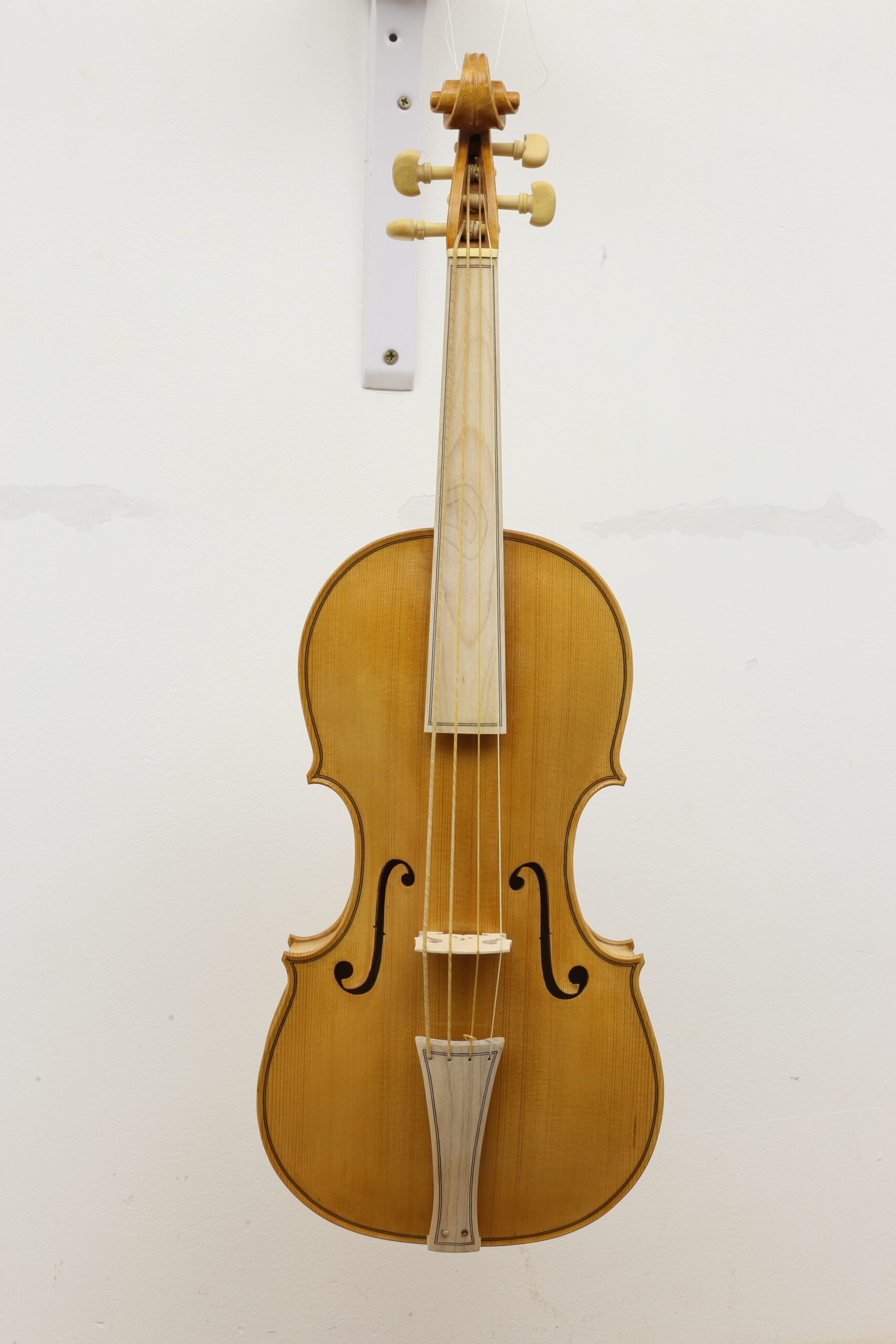
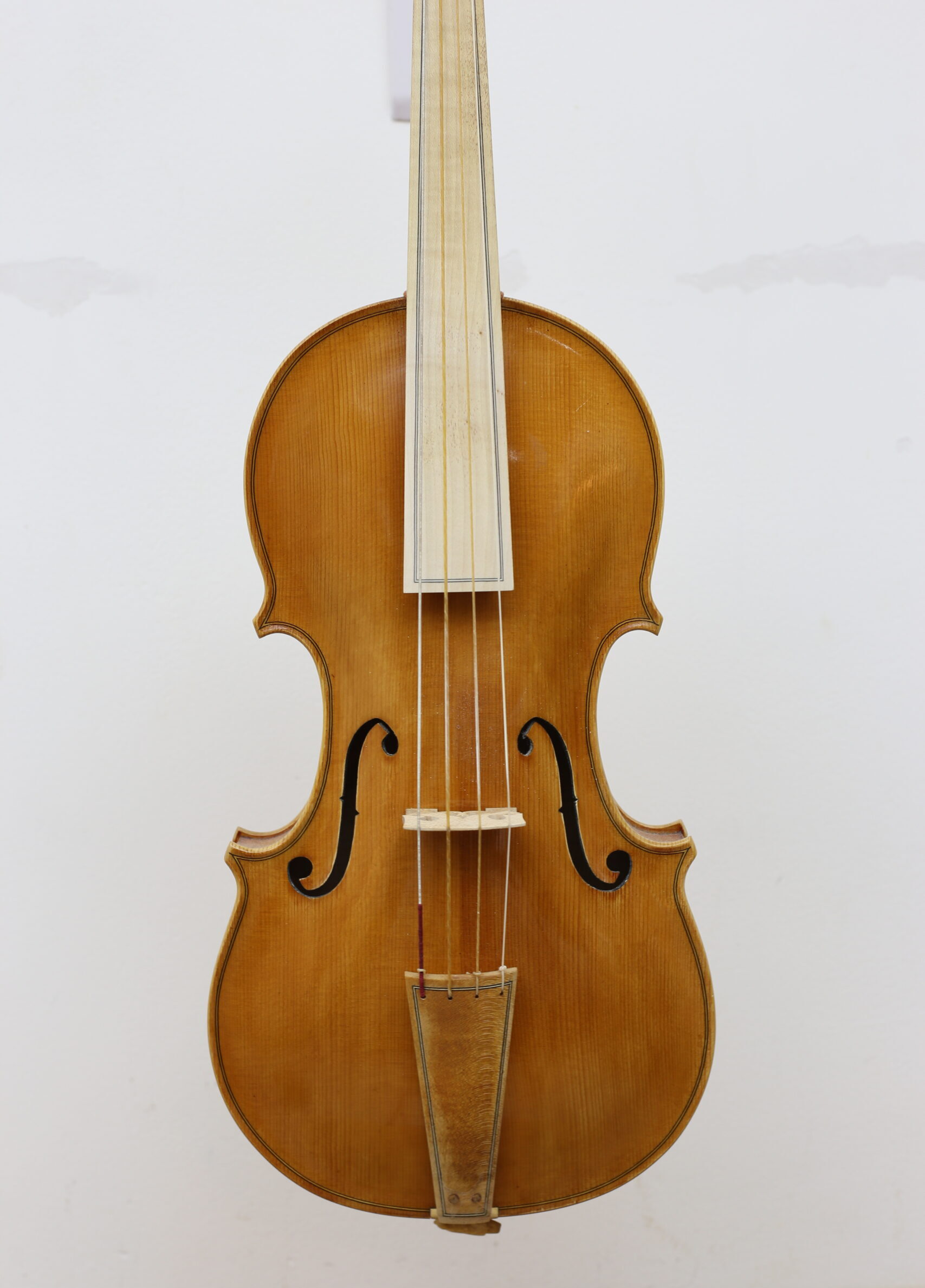
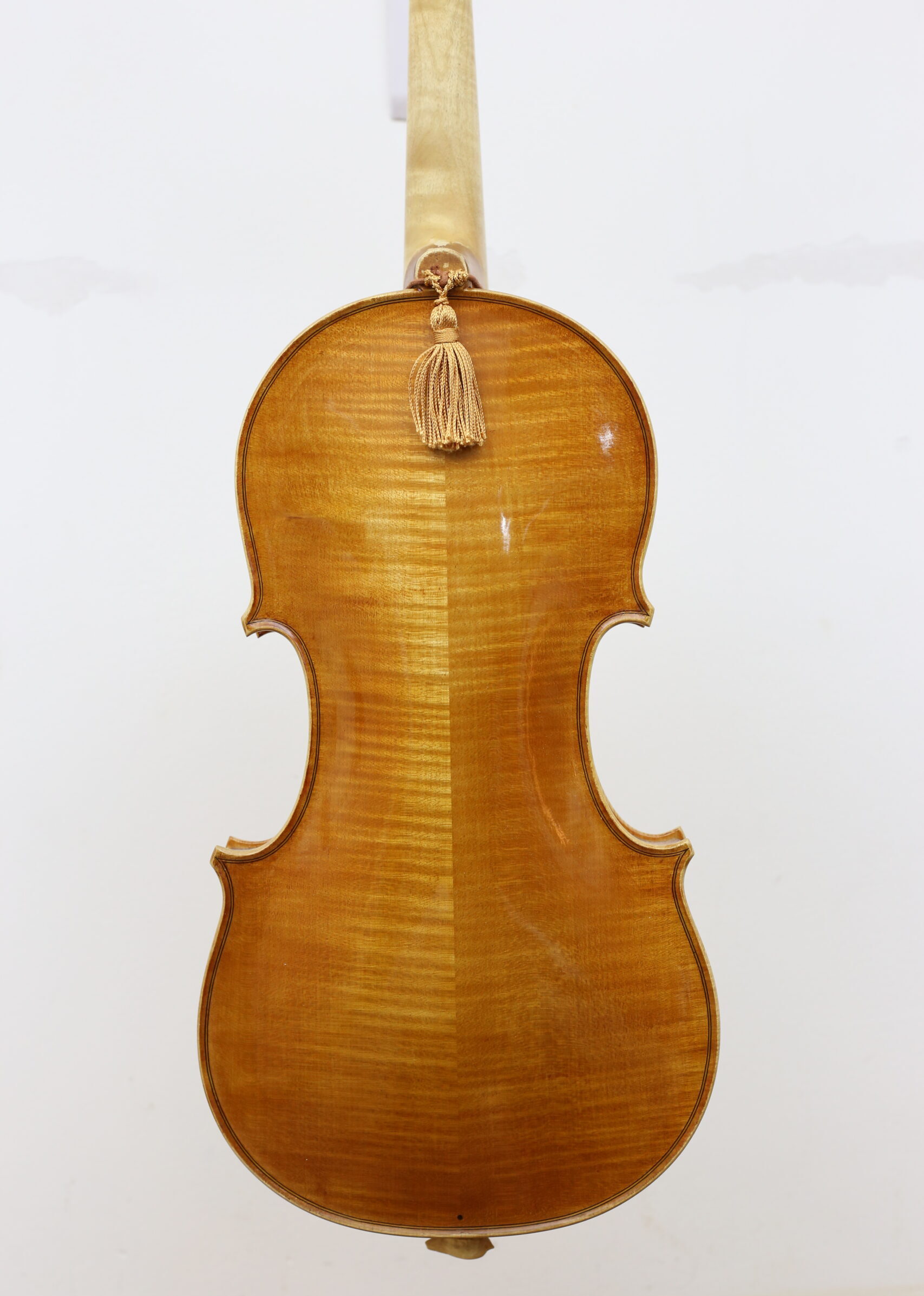
“Judas” is a handcrafted baroque violin based on Antonio Stradivari’s Long Pattern model, taking particular inspiration from the “Harrison” Stradivari.
The Long Pattern represents a less commonly encountered period in Stradivari’s work. Its slightly longer and more slender proportions give the instrument a distinctive character, combining a broad voice with a focused and projecting sound.
Rather than following a single historical instrument throughout, “Judas” combines the Stradivari-inspired outline with arching influenced by Jacobus Stainer, making it an intentionally experimental interpretation of seventeenth-century violin-making traditions.
The foundation of this instrument lies in the late seventeenth-century work of Antonio Stradivari, particularly his Long Pattern instruments.
Compared with the proportions more commonly associated with Stradivari, the Long Pattern is slightly longer and more slender. These proportions were deliberately retained for “Judas”, contributing to the instrument’s focused and powerful character.
For the top plate, however, a different historical influence was introduced. Rather than using purely Stradivarian arching, the instrument incorporates a Stainer-inspired arching concept.
This combination of Italian outline and Tyrolean influence was not intended as a strict historical reconstruction. Instead, the instrument became an exploration of how characteristics from two important violin-making traditions could interact within a single baroque violin.
The f-holes are an original Eveldt design, further distinguishing the instrument from the historical models that inspired it.
“Judas” is entirely handmade using traditional baroque violin-making techniques.
The relatively elongated body reflects the characteristic proportions of Stradivari’s Long Pattern while retaining the construction principles of a historical baroque instrument.
The fingerboard is constructed from fine spruce veneered with maple, following traditional baroque practice.
Using a lightweight spruce core instead of a solid modern fingerboard reduces unnecessary mass around the neck while maintaining the appearance and durability of the veneered surface.
The neck itself follows the same compact and comfortable philosophy used throughout Eveldt’s baroque instruments, balancing historical construction with practical playability.
The violin is finished with a traditional amber oil varnish, chosen both for its visual character and its compatibility with the historical construction of the instrument.
The translucent finish allows the natural character of the wood to remain visible while giving the violin the warm appearance associated with Eveldt instruments.
The violin is fitted according to historically informed baroque practice, including:
The lightweight historical setup works together with the construction of the instrument to preserve responsiveness and resonance.
“Judas” has a large yet focused voice, with strong projection and particularly clear articulation.
Its sound is characterised by:
Despite its powerful voice, the instrument responds readily to the player. Its combination of resonance and clarity allows individual notes to remain defined even when the instrument is played with greater intensity.
This violin is particularly suited for:
Its focused character makes it particularly useful where projection must be combined with precision rather than sheer volume alone.
“Judas” represents an important stage in my development as a violin maker.
At the time this instrument was built, I was still actively exploring which ideas worked together and which directions I wanted to pursue in my own instruments. As a result, this violin became something of a learning project, an experiment built from several different ideas.
The Stradivari Long Pattern outline was combined with Stainer-inspired arching, while the f-holes were developed as an original design.
These decisions were not driven by the intention to reproduce one particular historical instrument exactly. The process was much more exploratory. I wanted to see what would happen when different elements that interested me were brought together.
There was something almost playful about that process: studying historical traditions, taking individual ideas from them and discovering how they behaved when combined.
For that reason, “Judas” is not only a baroque violin inspired by Stradivari and Stainer. It also documents an earlier stage in the development of my own approach to violin making, a period in which experimentation itself was an essential part of learning the craft.
Out of stock